After nearly ten years of lies, corruption, and cover-ups, the hammer is finally falling on Labour Together and the wider Starmer project. Earlier this month, the pro-Starmer thinktank’s former director, Morgan McSweeney, resigned as the prime minister’s chief of staff in disgrace as part of the scandal engulfing his mentor, Peter Mandelson. Then, last week, the Sunday Times and the Guardian revealed that McSweeney’s successor as Labour Together director between 2022-24 and current Cabinet Office minister Josh Simons ordered an American PR firm to investigate the professional, personal, and religious lives of journalists who had uncovered £730,000 in undeclared political donations. The dossiers produced on the journalists falsely linked them to a “pro-Kremlin” network, and their names were passed to British intelligence. (The National and Democracy for Sale had previously reported on Labour Together’s use of private investigators against reporters.) An investigation in Simons, led by his own government department, is supposedly underway.
Yesterday, I spoke to Paul Holden, one of the journalists targeted by Labour Together and the author of The Fraud: Keir Starmer, Morgan McSweeney, and the Crisis of British Democracy. We discussed the latest developments in this scandal, what it says about the state of political journalism in the UK, and what Labour Together’s power over the party means for the future of British politics. This conversation has been edited for length and clarity.
– Eli Machover
Eli Machover: When we spoke last October, you predicted that the exposure of the fraudulent activities of Labour Together – the organisation that propelled Keir Starmer to leader of the Labour party and, in turn, prime minister – could bring about the downfall of his administration. In the four months since, Morgan McSweeney – the former director of Labour Together and mastermind of the Starmer project – resigned as chief of staff over his connections to disgraced Jeffrey Epstein-associate Peter Mandelson, who McSweeney helped install as ambassador to the US. Yet much of the wrongdoing by Mandelson, McSweeney, and others has been in the public domain for quite some time. What does it say about the crisis of political journalism in Britain that the sordid truth about the rightwing of the Labour party is only now being brought to light by mainstream news outlets?
Paul Holden: To a great extent it explains how we got to where we are now. We have a government that was elected in 2024 with a massive majority, but the people who were in it, the forces they represented, their style of government, and their ethical framework weren’t disclosed to the public. In large part that was due to active decisions that journalists made not to disclose things they were told.
The classic example is in 2020, when Starmer ran for the Labour leadership. We know that there were people in Starmer’s team who told journalists that his campaign was based on a falsehood – that he was pitching himself as leftwing to win the leadership, but that he wouldn’t govern that way. It’s very clear that there were plenty of journalists who were fully aware that Morgan McSweeney was a hyper-factional player. It seems like there were plenty of journalists who knew the extent of McSweeney’s role in waging this covert war on the left, through Labour Together, and yet nobody bothered to report it at the time.
One consequence is that the Labour membership had no idea what they were electing and they were very upset and surprised to find out that they had been lied to. I think there’s an additional level of anger now, because it seems like they were being lied to with the complicity of the media who weren’t reporting things that were in the public interest.
The same thing happened in 2024, where there was a total absence of scrutiny. From at least 2023 onward, everybody could read the tea leaves that this was going to be a massive Labour majority. Now, the lobby journalists are structurally in a very problematic position for our democracy, because their entire careers depend on getting access to gossip and stories, which is an entirely contingent relationship depending on the goodwill of politicians. But they’re also supposed to be holding them to account. That’s a minefield to navigate, and it meant there was a decision made by many journalists in 2023 and 2024 not to scrutinise these people, because they were going to be in power and applying scrutiny would mean losing access.
EM: How do you understand the relationship between the Mandelson-Epstein scandal and the revelations about Labour Together that you set out in The Fraud?
PH: I think there’s a dialectical relationship between the book and the Mandelson-Epstein scandal. It’s been interesting how often something from the book has broken at the same time as a Mandelson revelation. For example, Mandelson was removed in September last year, and within days I was releasing information about Paul Ovenden. Those two things worked in lockstep. I’m not going to claim that my stories are nearly as important as the Mandelson ones, because that’s surely the biggest political scandal of our lifetimes. But they have mutually reinforced each other to create the sense that there is something utterly toxic and corrupt at the heart of this political project. Since last September, because of my book and other revelations, it’s basically been five months of nonstop outrageous scandal.
EM: One of those at the heart of the Labour Together fold is Josh Simons, who succeeded McSweeney as director of the think-tank and now serves as a minister in the Cabinet Office. He is currently under investigation by the Independent Adviser on Ministers’ Interests, Laurie Magnus, over his commissioning of dossiers in late 2023 on you and a number of other journalists who had been investigating the unlawful affairs of Labour Together. It’s striking that one of those other journalists who was smeared worked, and still works, for the Guardian, a newspaper whose political editor, Pippa Crerar, intended to run a story based on briefings about you from Labour Together. What does this say about the contradictory political agendas within such outlets?
PH: I think a better way to understand what’s happened is to look at how this political project understands journalism. Oddly enough, it’s something that was candidly admitted by Anushka Asthana – who had been the deputy political editor of the Guardian – but without any degree of serious reflection on what she was saying. She wrote this book, Taken As Red, which gives the full story of all Labour Together were doing between 2017 and 2020. The parallels between what they were doing in that period and what then happened to me and others subsequently are remarkable. That is, you had independent journalists doing factually accurate, public-interest reporting, which presented an obstacle to the political ambitions of McSweeney and Labour Together. The response in 2019 was to destroy those people’s lives. They created incredibly misleading dossiers on journalists of the left to drive them out of business. I was very lucky to survive what they came at me with in 2023, but there are lots of journalists who didn’t. Many journalists at The Canary lost their jobs, lost their livelihoods. In some cases it was their first job in journalism. In addition to destroying people’s lives and celebrating it, they also wanted to send a powerful message to the rest of the media – “If you go here, if you start scrutinising and looking at the things that we’ve been up to, we’ll come after you, too. We will smear you in the same way, and you will not be able to survive it.”
This is straight out of the Mandelson playbook. From 2017, with McSweeney at the heart of this political project, you’ve basically inserted Mandelson’s method, and then later Mandelson himself. Together Mandelson and McSweeney were deciding who can and can’t be a Labour party councillor or MP (although the party has denied this allegation). That’s deeply problematic from a democratic perspective.
Nobody in the public is saying “I really want Mandelson to return to public life”. Absolutely nobody. And now, nobody wants this government that we have today, which came to power through an undemocratic takeover of the Labour party.
EM: I remember that only 4.5% of the Labour membership voted for Liz Kendall to become leader – putting her in last place – when Morgan McSweeney ran her campaign back in 2015.
PH: Labour members very clearly understood that the politics this faction represents is deeply unpopular, and rightly so. It’s a disgusting politics.
When we started publishing stories about Labour Together in 2023, they hired a company to put together these insane dossiers on me and Andrew Feinstein, as well as on Gabriel Pogrund, Harry Yorke, and Henry Dyer. As far as I can see, they decided that they needed to respond to our stories by attacking our reputations, which they eventually did with a farrago of lies, in an attempt to chill further scrutiny.
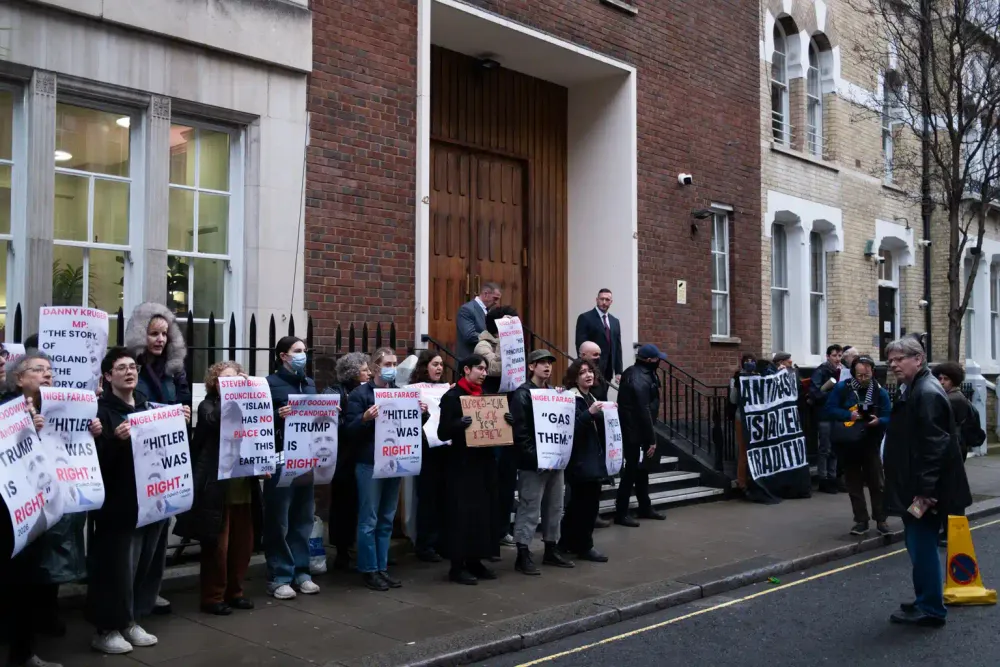
In my case, that involved reporting me to security services. It’s totally unsurprising to me that Gabriel Pogrund’s Jewishness became an issue in these reports, because this is a political project that’s rooted in instrumentalising antisemitism.
It shouldn’t be material to the story Gabriel worked on – it was specifically not about antisemitism. I don’t think I’m giving away trade secrets, but when I approached him back in 2023, we were pretty open with each other. I said, I come to the Labour antisemitism crisis from a different perspective to you. And he said, yes, I understand that. But the reporting that we published didn’t touch on those things because it was a very straightforward story about unlawful activity in relation to the failure to declare donations, which is actually a fraud and corruption story. It’s not a story about antisemitism.
And yet, in response to that, these people, these smear merchants, reach for his Jewishness as something to use against him. And I think that’s just par for the course.
EM: There’s a kind of parallel here. They see how effective weaponising antisemitism has been as a tool to attack the left and those Jews who are critical of Israel, why not employ it in some kind of inverted way against a Jewish journalist?
PH: I don’t know exactly what’s in the dossier [regarding his Jewishness], and I respect Gabriel’s privacy. It does seem like he is genuinely, deeply offended by what was said in that report. They went after him in a viscerally personal way, in a way that they didn’t go after Andrew or I. The allegations against me are mostly political, not anything to do with my faith or my ethnicity, although they focus on my family quite a lot, which is a massive violation of privacy. But if you understand this political project, it’s exactly what you’d expect these people to do.
EM: Earlier this week, there was an urgent question in the House of Commons about the investigation into Simons’ activities. From the responses given by the chief secretary to the prime minister Darren Jones MP – one of the many frontbenchers whose offices were staffed by Labour Together employees when in Opposition – it appears the investigation is strictly limited to the period Simons has been a minister in government. Do you think it will lead anywhere?
PH: I’m very worried about it. You saw that story about how Simons sent a message to a WhatsApp group, which he clearly didn’t intend to, because he quickly deleted it. In the message he suggests that the propriety and ethics team in the Cabinet Office are moving at speed and have cleared him. Simons, of course, is a minister in the Cabinet Office. So it’s the Cabinet Office investigating one of their own.
The whole thing is nonsense. The propriety and ethics team don’t have all the full facts at their disposal because they haven’t spoken to me, and I have unique knowledge about what actually happened. I’ve had multiple conversations with people about what Simons has been doing around this issue both as a minister and before he became a minister. They can’t yet know certain things that prove that he broke the code. I’ve now written a letter to Laurie Magnus and I’m waiting to see if he’ll respond to me.
EM: About things Simons has done during his time as a government minister?
PH: Yes, there’s lots that I know about that Laurie Magnus will not know about. It will be a very simple test as to whether this is a serious investigation or not – does Laurie Magnus speak to me and other victims of the Labour Together campaign or not? If he doesn’t, and if he goes on to clear Josh Simons, then it’s a coverup.
EM: It seems it’s no longer a question of “if” Starmer will leave office, but “when”. We’ve got the Gorton Denton by-election and then the local elections in May, and the results are looking like they’ll be pretty dire for Labour. Yet when 110 Labour MPs – over a quarter of the government benches in the Commons – have received donations or donations in kind from Labour Together, will Starmer departing from office really change much? At this point is there any way the Labour Together hegemony within the party can be broken?
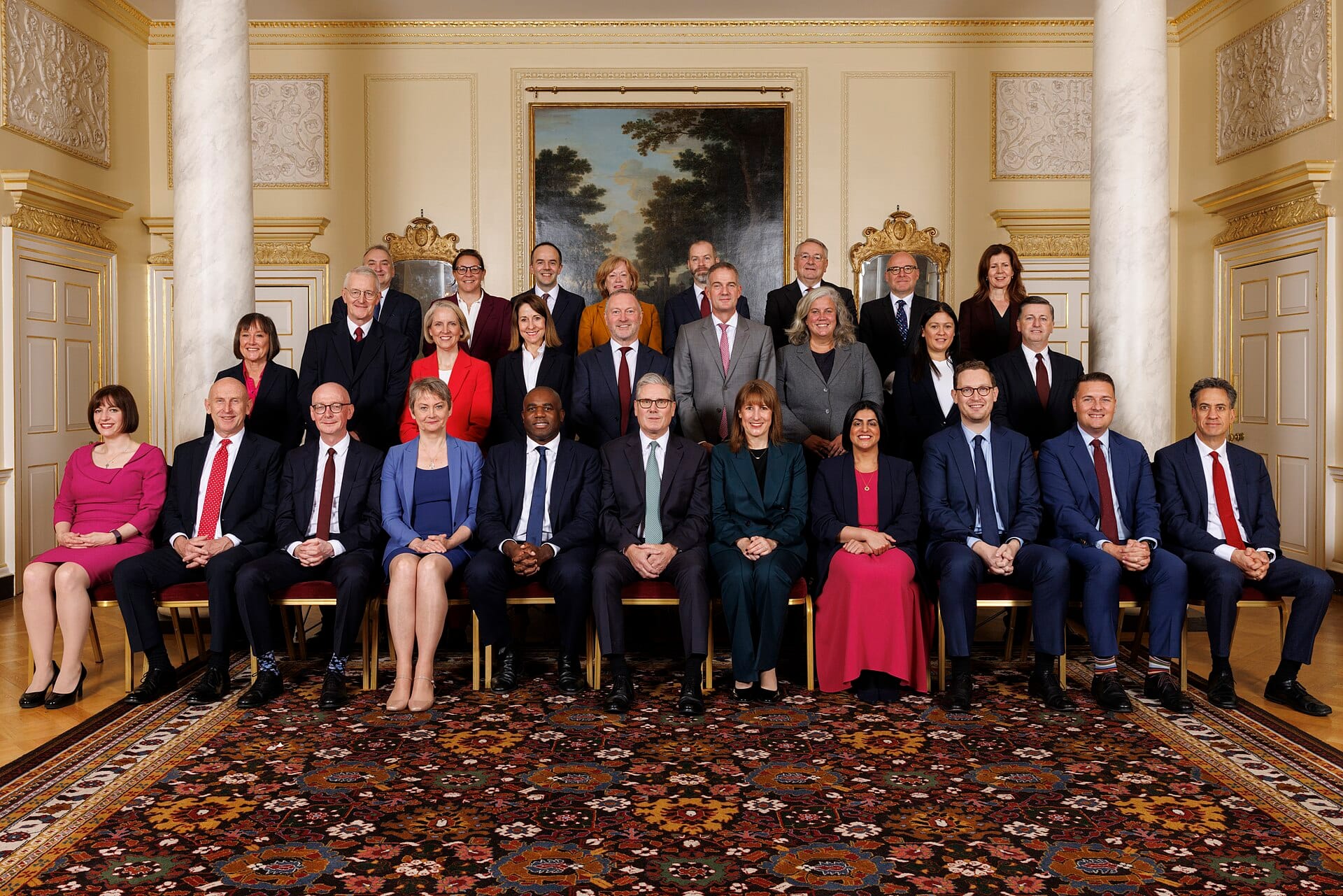
PH: The problem the party faces now is that the Labour Together project has been so successful. Pretty much every senior cabinet position is held by someone with a long-term connection to McSweeney or Labour Together. Shabana Mahmood, Wes Streeting, Bridget Phillipson, Rachel Reeves, Steve Reed – they’ve all been associated with Labour Together for a very long time. That means even though everybody understands Starmer is a lame duck prime minister, nobody will move against him.
In a normal, functioning political party, your ruling clique would have won democratically through convincing people they are the best people to lead by the force of their ideas or personality. There would be plenty of people able to take Starmer’s place, and they would move very swiftly to replace him. But that’s not what’s happened in the Labour party, because of the brutal suppression of dissenting voices. This clique is not just absolutely covered in scandal, but full of people whom the public can’t stand because they are uncharismatic and unlikable, with policies that nobody wants. In pretty much every government since the second world war up until now, if you had a prime minister as unpopular as Keir Starmer after the Mandelson crisis, somebody in the cabinet would’ve moved.
So now the whole country sits and suffers. It’s another one of the ridiculous consequences of the success of this Labour Together project. We all know he’s an idiot. We all know nobody respects him, that he doesn’t seem to have any sense of political direction or any sort of political message. I don’t think he even understands what’s happening in his own cabinet. I don’t think he understands how he came to power, in a very deep and fundamental way, because he doesn’t care to. He just outsourced the political management to Labour Together, and now it’s a train wreck.
EM: So what happens from here?
PH: It seems obvious that the Labour party could do badly in May, but I think the way in which the by-election is being framed is wrong – that it’s only if the Green party wins that this will be a loss for the Labour party. This is an insane situation – 18 months after a landslide election, in a seat Labour got more than 50% of the vote and has held for I don’t know how many decades – it’s now supposedly a three horse race.
EM: It’s quite remarkable the extent to which they were willing to put their faction above the party with regards to the selection of Andy Burnham.
PH: It’s clear this would be a cakewalk for them if they had selected Andy Burnham. But there’s a fear they have of him, a fear they have of basically anybody else outside their clique. It’s both political in the sense that they worry that Burnham will come in and they won’t have favour under him, that he’ll have a cabinet that’s more reflective of different traditions in the party. There’s also another, more profound fear about what happens if Burnham comes in and says “Wow, it really looks like things have gone wrong in this party for a long period of time. I’m going to appoint the forensic auditor to look into all the allegations of financial impropriety. I’m also going to appoint an inquiry into what Labour Together was doing between 2017 and now.” Where does that lead? It leads to places that aren’t just unhelpful to these people’s political career, they’re potentially terminal – not just for their political careers, but any life after.
Take Steve Reed – just on the basis of what I’ve published, there shouldn’t be a place in public life for such a person. He’s not the sort of person who has the moral fiber and character to be in a position of power. Were there to be an inquiry that airs all the stuff that’s been done over the last decade in the Labour party and through Labour Together, I think the public will find it so upsetting that there would be lots of people who’d find themselves turfed out of mainstream politics.
EM: There’s that quote from a source close to Starmer saying that Reform winning Gorton and Denton would be terrible, but the Greens winning would be existential. How do you think Labour might respond to a Green victory in the by-election or in May’s local elections? Do you expect Zack Polanski to be subjected to further antisemitism-related attacks from the Labour Together clique.
PH: There was an article earlier this year about how they were going to take the gloves off with Polanski and antisemitism in the Green party. I can’t think of anything more tired and unfortunate.
At this point, the Labour party has pretty explicitly said that left-wing Jews are no longer welcome. They are literally saying there’s no place for anti-Zionism in the Labour party or even the public sphere. It’s a mad thing to say.
EM: And it ties into their foreign policy – the ways in which they’ve justified their support for a genocidal state.
PH: It’s all linked. To say you should be scared of the Green party because they are antisemitic when they actually have a Jewish leader shows the depravity of this discourse, and how it’s been degraded by what they’ve been doing for the past decade. Current polling suggests 20% of the population support the Greens. There’s a possibility that they could form a government in three years time. Telling Jewish people, “You need to be very, very scared because there’s a project coming into power that hates you” – this is just not true. It’s fundamentally, deeply untrue, and I can’t imagine anything more despicable. I really can’t.▼
To donate once or monthly, click here.
Author

Eli Machover is a PhD candidate in politics at the University of Oxford and an editor at Vashti.
Sign up for The Pickle and New, From Vashti.
Stay up to date with Vashti.