How the centre-left media legitimised a genocide
An interview with journalist and media analyst Adam H. Johnson.
Israel’s genocide in Gaza, now into its third year, would not have been possible without the support of the mainstream media. Western broadcasters, newspapers, and magazines have mangled the English language in support of a live-streamed campaign of erasure – diluting and repackaging war crimes as retaliation and self-defence, while staying silent as Israel slaughtered their industry peers.
It matters, now and for the historical record, how Israel’s war crimes have been reported. It’s crucial to understand how the media sold the engineered famine in Gaza and its still unfolding devastation. That there was an avalanche of genocidal intent expressed even before genocide was carried out with uncompromising precision is necessary context. Legacy media systematically suppressed this information, giving cover to complicit politicians and preventing much of the public from connecting the dots about this incomprehensible reality until it was far too late.
A new data-driven book by US-based journalist Adam H. Johnson argues that the media’s role in the genocide in Gaza must never be forgotten and that we must pursue accountability for its complicity.
In How to Sell A Genocide: The Media’s Complicity in the Destruction of Gaza, published by Pluto Press, Johnson analyses over 12,000 articles and 5,000 TV clips across nine major US outlets, makes the underlying data publicly available, interviews journalists and sources from those newsrooms, and compares coverage of other contemporary conflicts to crystallise the media’s central role in legitimising the destruction of Gaza.
Johnson, a media analyst and co-host of the podcast Citations Needed, exhaustively examines the tools employed by the most trusted sources of news in the US and demonstrates how comparable media institutions, including those in the UK, replicated them. The book is not only an all-encompassing source of evidence against those who consistently provided cover for perpetrators the world over, but also a manual for identifying the media tactics habitually employed to manufacture consent.
In an interview earlier this month, I spoke to Johnson about the narratives that emerged after 7 October, the staggering numbers that indicate the extent of media bias against Palestinians, and just how central a role the media continues to play. This conversation has been lightly edited for clarity.
– Hamza Yusuf
Hamza Yusuf: At what point did it become apparent that this book had to be written?
Adam Johnson: Very early on. It emerged from several articles I had written for The Intercept, The Nation and others. There was a torrent of propaganda and it was a full-time job pushing back against the logic and narratives pushing genocide, which was apparent from the very beginning.
HY: You make clear from the start the scope is not “the conservative or MAGA media for the simple fact that the pernicious nature of their media regime is not in doubt or dispute.” Instead, you turn your attention to the “centre-left media”. Could you explain that rationale?
AJ: The book didn’t focus on the conservative or MAGA media’s dehumanisation of Palestinians for the simple fact that the pernicious nature of their media regime is not in doubt or dispute. Outlets like Fox News, Daily Wire, right-wing AM radio, Sinclair News, and the pages of the Wall Street Journal are, for the most part, openly genocidal against Palestinians and make no pretence otherwise.
Added to this fact, it was a Democrat in the White House sending the bombs, marketing the targets and lying and covering up for the genocide; liberal media’s buy-in was essential to maintain this support. Racist, rightwing media’s support for the destruction of Gaza was a given, the liberal support for it was contested, thus the need for more sophisticated and elaborate propaganda.
HY: The beheaded babies story is probably the defining feature of the global manufacturing consent machine – it was plastered across the UK press front pages, for example. You allude to this in chapter one as “ISIS-fication”: this very specific anti-Arab, anti-Muslim trope that could then be cynically and meticulously instrumentalised by the US media. Could you unpack how critical this was in the moments just after 7 October?
AJ: The “beheaded babies” lie served a crucial, high leverage function in the early weeks of the genocide. The primary goal in Washington and Tel Aviv was the removal of demands for a ceasefire from the realm of “Political Seriousness”. To do this, Hamas had to be indexed as a cartoon “terrorist” organisation that kills solely for sadistic, antisemitic glee rather than being a militant group with any secular or political demands. Regardless of what one thought of their actual tactics, obviously beheading dozens of babies would be an act of gratuitous sadism. But this story was, of course, not true, which anyone who knew anything about Hamas, and their own years-long battle against ISIS in Gaza (many of which we now know were armed and backed by Israel), knew at the time. But it appealed to racist tropes about barbaric, asiatic hordes, so it spread like wildfire then quietly walked back after it had served its primary, genocidal purpose.
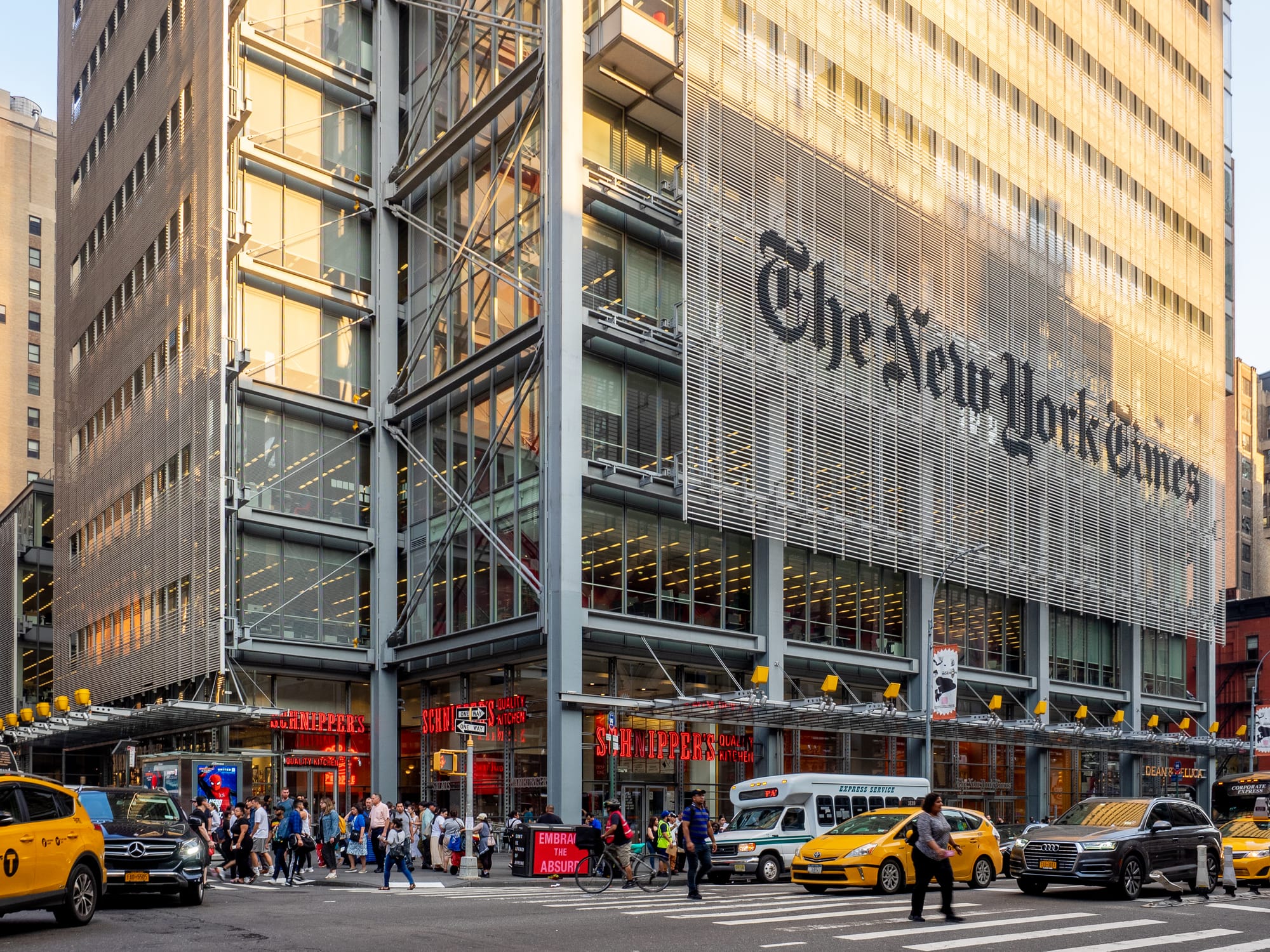
HY: Beyond manipulative narrative building, throughout the book you discuss just how important language is. Your data analysis in chapter two showed how the New York Times called 7 October a “massacre” 124 times, while never once applying the term to Israeli attacks on Palestinians; CNN and the Washington Post showed the same asymmetry, using the label 43 and 50 times respectively, and only for Israeli victims. In chapter four, you dissect the “natural disaster-ising of Israeli war crimes” and how crimes are covered like earthquakes in a passive genre of reporting. What role does this combined, subtle but conscious application of language play?
AJ: Most importantly it concludes, beyond a reasonable doubt, structural racism and bias in US media. To the extent those defending this asymmetry attempt to justify these glaring inconsistencies they can only do so via tautology: yes the language is one-sided but that’s because Hamas is a “terrorist organisation” which is another way of saying, “the other side is The Bad Guys” – it’s entirely circular. It’s the way a child thinks, not from first principles or any universalist or consistent standard, but from emotion, from vague feelings of their own righteousness, and their own racist myth-making. It’s unserious, unrigorous and was the foundation of US media’s coverage. But because it’s never meaningfully challenged, this imperialist framework largely works.
HY: The data allows you to reveal patterns that are undeniable and instructive, and therefore draw comparisons. How important is the comparison to Russia-Ukraine in showing how a lot of this stems from baked-in dehumanisation in newsrooms?
Again, it’s baked into the axioms of Western journalism. No one is allowed to challenge these “War on Terrorism” ontologies so everyone mindlessly runs with them. From the very beginning of the genocide, it was simply taken for granted – often, as I document, directed from the top-down – that this was a clash of civilizations, of Westerners versus nihilistically violent jihadi cartoons. Any attempt to provide context for Hamas’ actions, or discuss what could have preceded it was grounds for disciplining. It was seen as “terrorism” apologia or some other such preening hysteria. So what we got was a simplistic, one-sided good v evil narrative and by the time people tried to complicate this, or point out the manifest nihilism of Israel’s own mass killing, it was too late. The “facts of the ground” were established and genocide was inevitable.
HY: Finally, what does accountability look like? Or at least the pathway to it?
AJ: Accountability will be very difficult and likely won’t look like anything approaching real justice. But it starts from delegitimising these institutions, joining Writers Against the War on Gaza’s (WAWOG) boycott of the New York Times and protesting and agitating against the worst offenders: Joe Scarborough, David Leonhardt, Jake Tapper, Jeffrey Goldberg, Patrick Kingsley, etc. These people, and many others, were central to inciting violence and ultimately genocide against Palestinians, and must not be allowed in polite, much less liberal or progressive, company.▼
There’s no corporation or big advertisers behind Vashti – we're a workers' cooperative and rely on small donations to keep running. Support our journalism to help break the consensus.
To donate once or monthly, click here.
Author
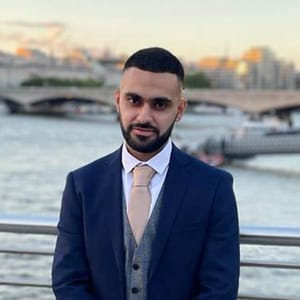
Hamza Yusuf is a British-Palestinian political researcher and writer based in London.
Sign up for The Pickle and New, From Vashti.
Stay up to date with Vashti.