All photographs in this article are property of the author. See end for usage permissions and captions.
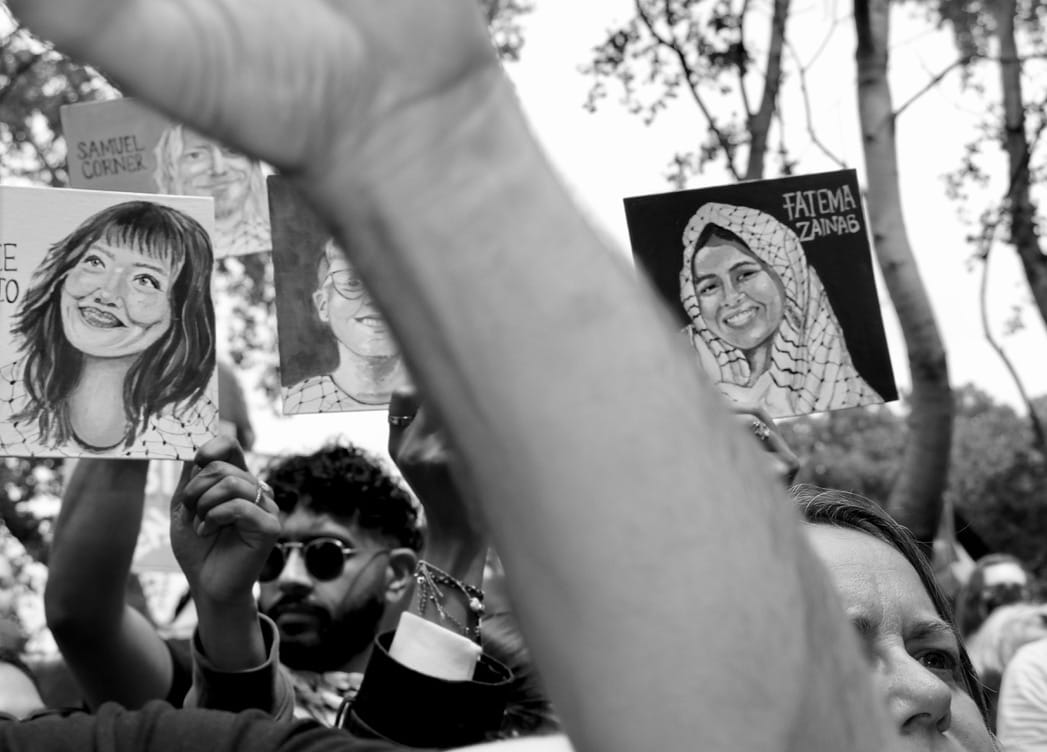
A week ago today, four Palestine Action activists became the first people in Britain sentenced as terrorists for damaging property through direct action. Charlotte (Lottie) Head and Leona (Ellie) Kamio were each given a custodial sentence of six years less 45 days, Fatema Zainab Rajwani was sentenced to five years and eight months less 45 days, and Samuel Corner was sentenced to a combined eight years and eight months for both the criminal damage offense and a conviction of grievous bodily harm without intent.
As a result of a “terror connection” applied at sentencing, these four will also have to serve at least two-thirds of these sentences before consideration for parole, and spend an additional year on license before being subject to up to 15 years of notification requirements.
The Filton 4, as they’re known, had already served nearly 18 months remanded in custody without trial since August 2024, when they and two other actionists were arrested for a protest against Israel’s genocide in Gaza in which they targeted an Elbit Systems “research and development” site near Bristol, spraying red paint on the walls and damaging drones and computers made by Israel’s largest weapons manufacturer. In total, the “Filton 25” constitutes these six and the nineteen further individuals accused of being responsible for the action.
In February, a jury acquitted them and two co-defendants of aggravated burglary and failed to return a verdict on all other allegations. The six were subsequently re-tried in May and while two were acquitted again of the final charge, the four – Sam, Ellie, Fatema Zainab and Lottie – were convicted of criminal damage by a second jury.
In the wake of the second trial, there has been widespread outrage at the conduct of Judge Justice Johnson, who did not inform the jury that an unprecedented “terror connection” would later be applied to sentence the actionists as terrorists without them having been tried or convicted by the jury as terrorists.
Once the media blackout on the case was lifted after the trial concluded, revealing the potential use of a “terror connection”, Johnson then refused to recuse himself from the case following an official request from the defense on the basis of prejudicial bias.
Throughout the two years of proceedings, journalists, lawyers, and family members of the actionists repeatedly raised serious concerns about the impartiality and independence of the prosecution and whether the right to a fair trial had been compromised.
The meaning of this sentencing could not be more clear. As Amnesty International UK’s chief executive Kerry Moscogiuri said after the judge’s announcement, “The defendants in this case were sentenced as terrorists because prosecutors want to make an example of them and set a precedent for how direct action protesters could be treated in the future.”
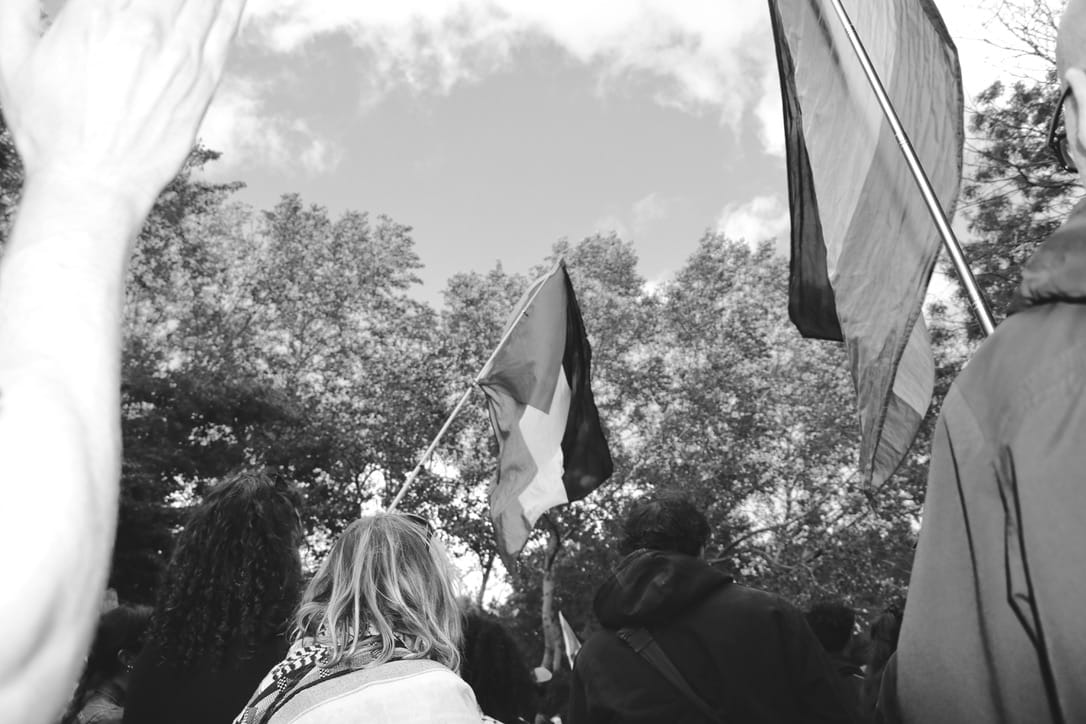
Before the sentences were handed down on Friday, thousands gathered outside Woolwich Crown Court in London, the site of the sentencing, in a show of collective dissent. Collecting on a grassy verge, behind a narrow section of trees that separates the road from the fencing beside the entrance to the court, those gathered were there to stand in solidarity with Sam, Ellie, Fatema Zainab, Lottie, and their loved ones, and to find out together whether this unprecedented attack on direct action would become a reality.
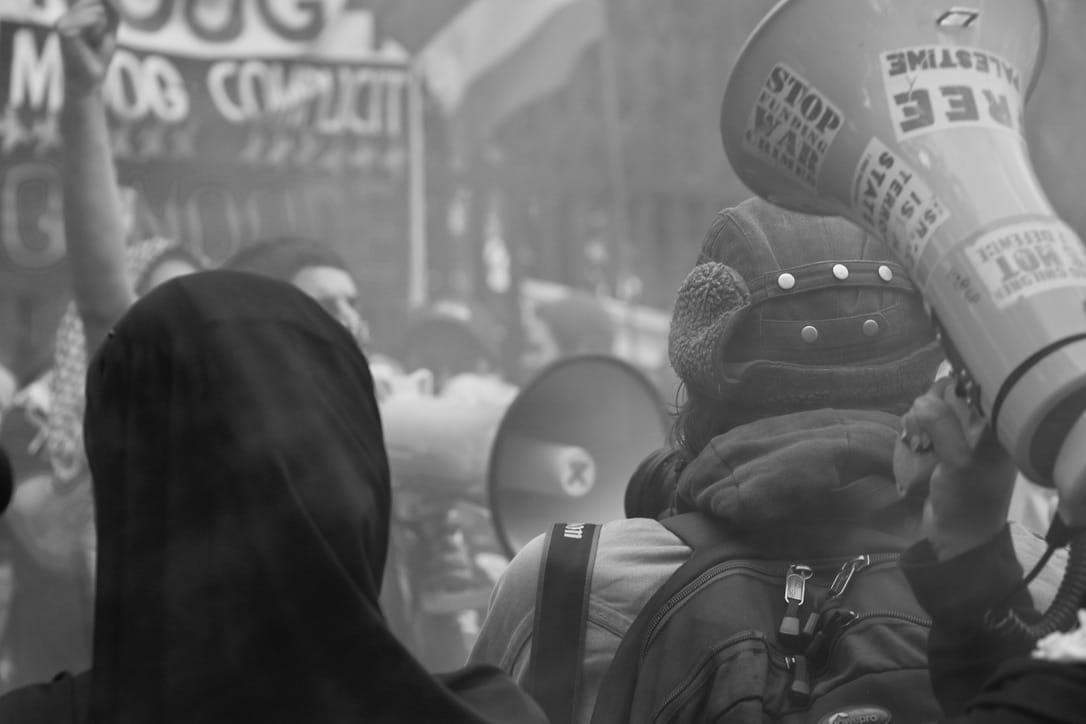
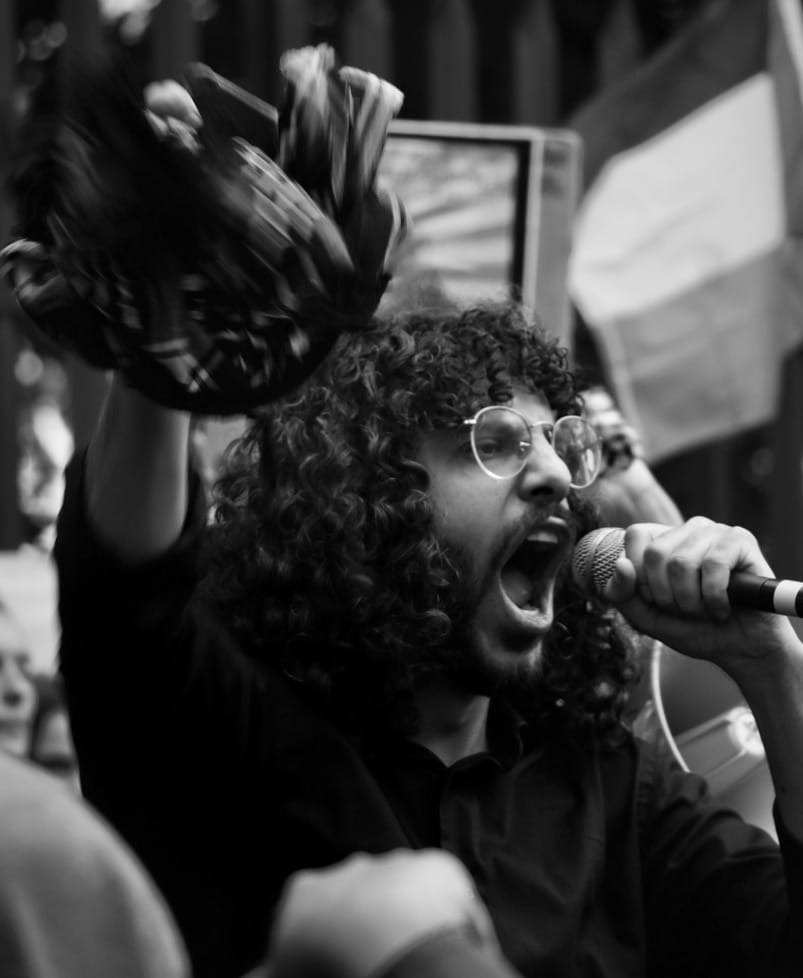
The gradient of the verge created an enclosed amphitheater, full of demonstrators from 10am until 7pm, when the devastatingly long sentences were finally handed down. Over the course of the day there were speakers, chanting, food, and care – all in their names.
The Met police made their presence felt throughout the day and violently arrested solidarity activists later that evening. But this was not a violent day, nor a sombre or hopeless one. It would be almost insulting to suggest that the four, their families, all those gathered did not know that lengthy sentences were coming. Not because the judgements were fair – an absurd notion following these proceedings and the last few years of state repression of Palestine advocacy in the UK. But because it was clear to all that these four actionists would serve as a test of just how far the law could be used to punish their challenge to the UK-US-Israel war machine.
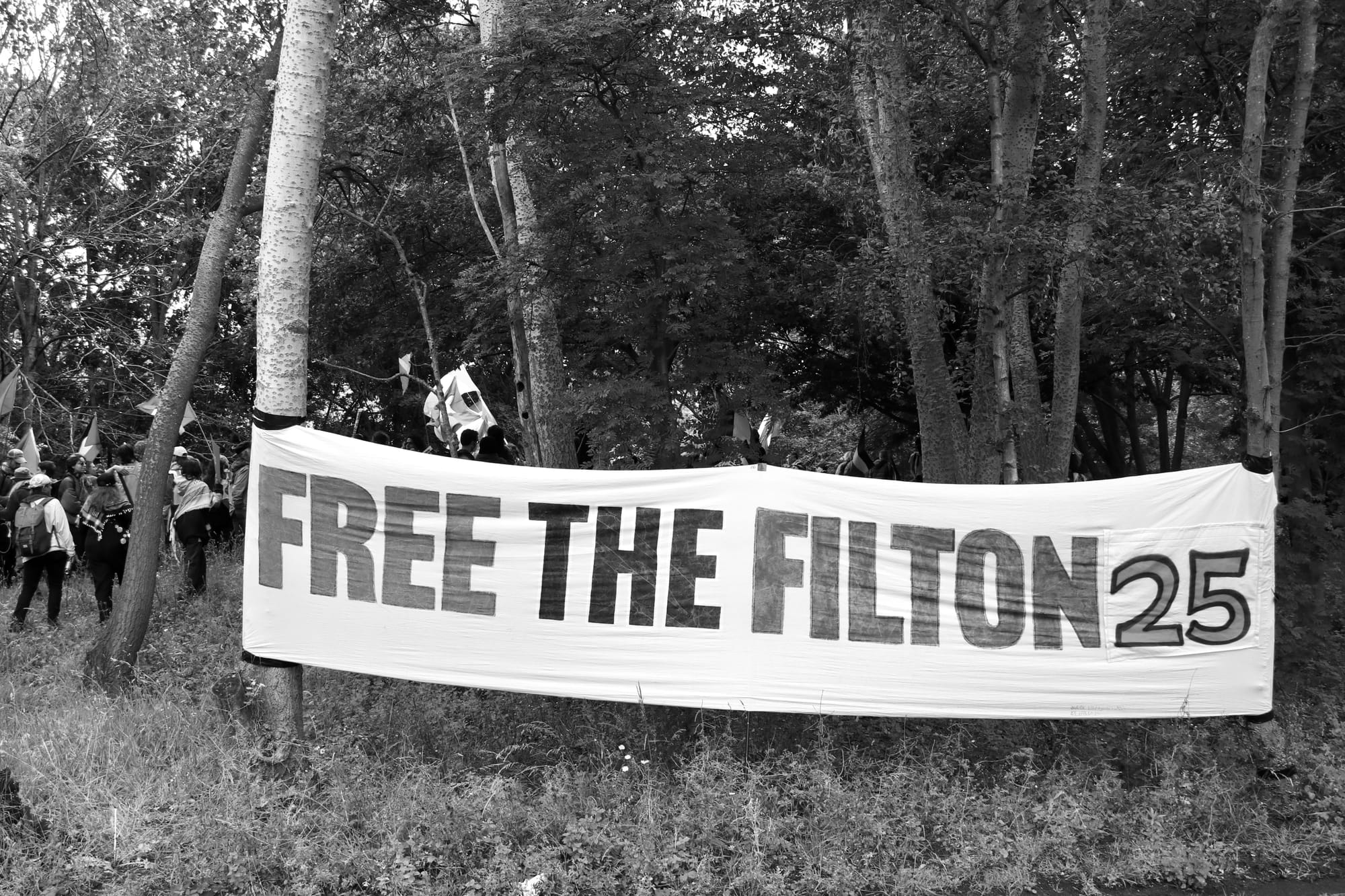
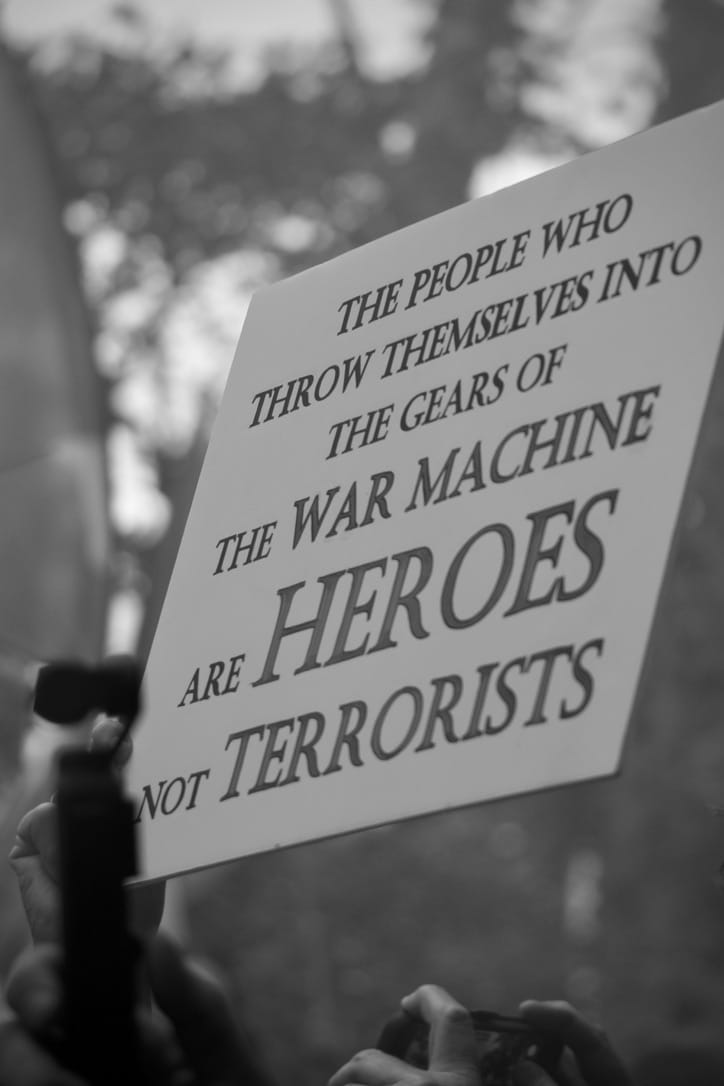
These images of that day convey the steadfastness, the heels-dug-in determination, the care, and in some places the irreverence, that lives in the face of such a course of events. One that is no longer unbelievable because its machinations are so stark.
That evening, after the sentences were handed down, supporters blocked the van returning the four to prisons to serve sentences that would now devour almost a decade of their lives. This was an act of communication: a message that exposes the apparatus of separation – the walls of courts, prisons and vans – to be permeable by care. A message from the Palestine movement that the fight is not over.
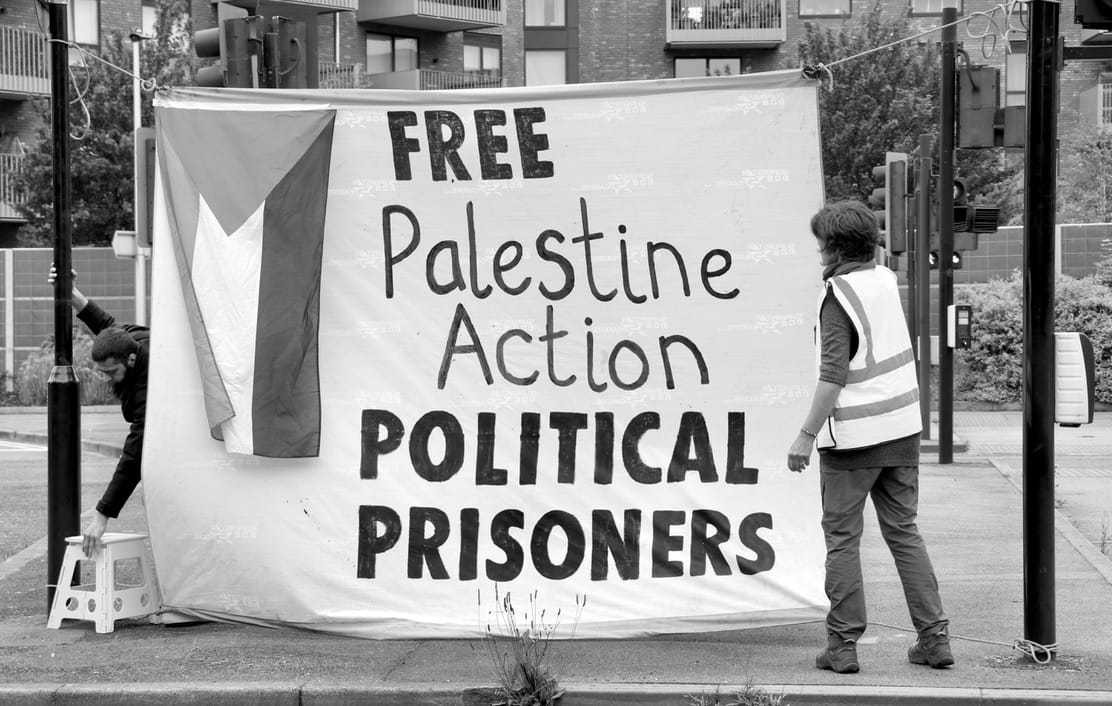
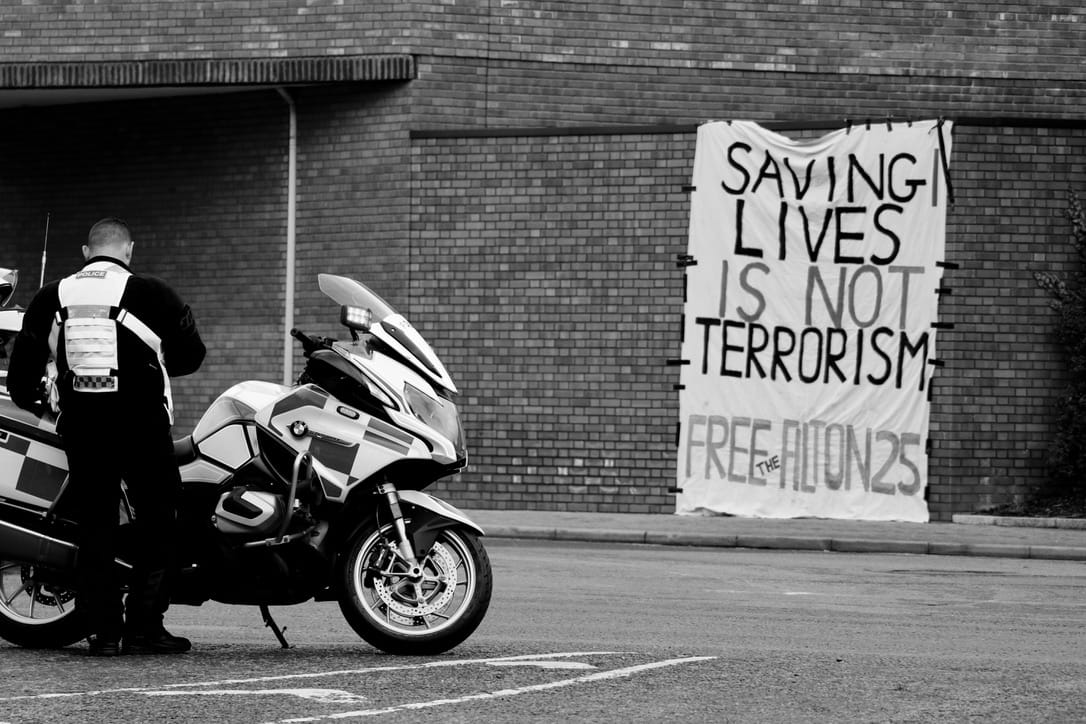
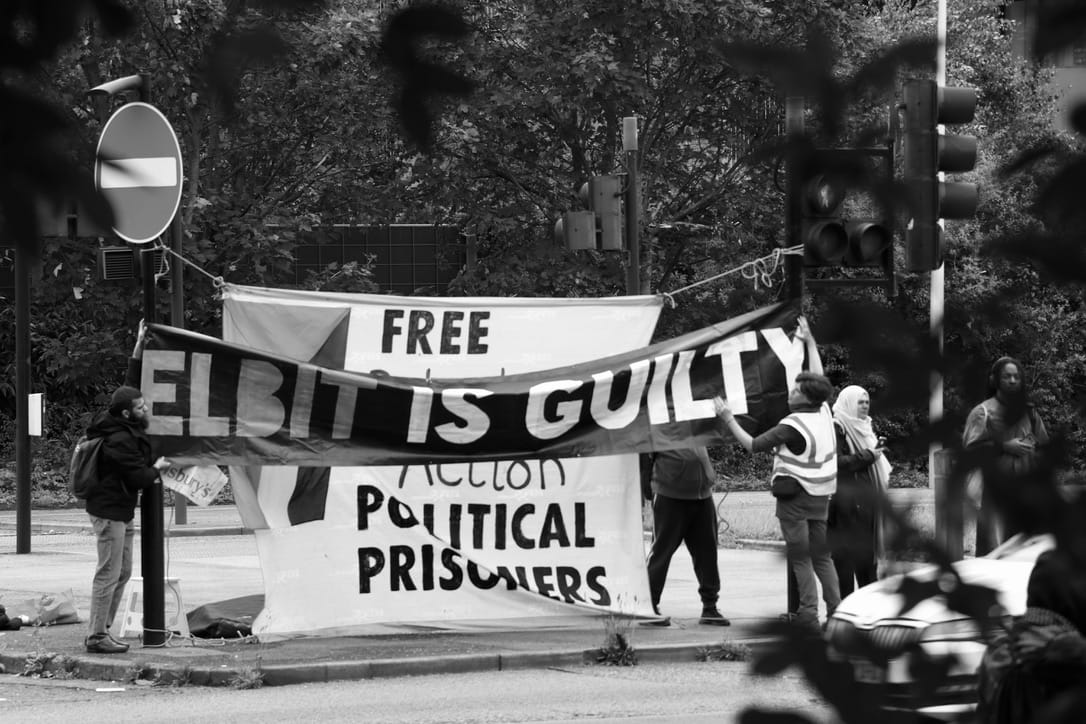
In the early morning, as the crowd paces up through the trees towards the sound system, turning across the entrance to Woolwich Crown Court a series of banners start to be hung from lampposts and traffic lights on the crossroad opposite. Police loll about at the entrance to the court and intermittently tell people to get off the roads. They move around to make their presence felt.
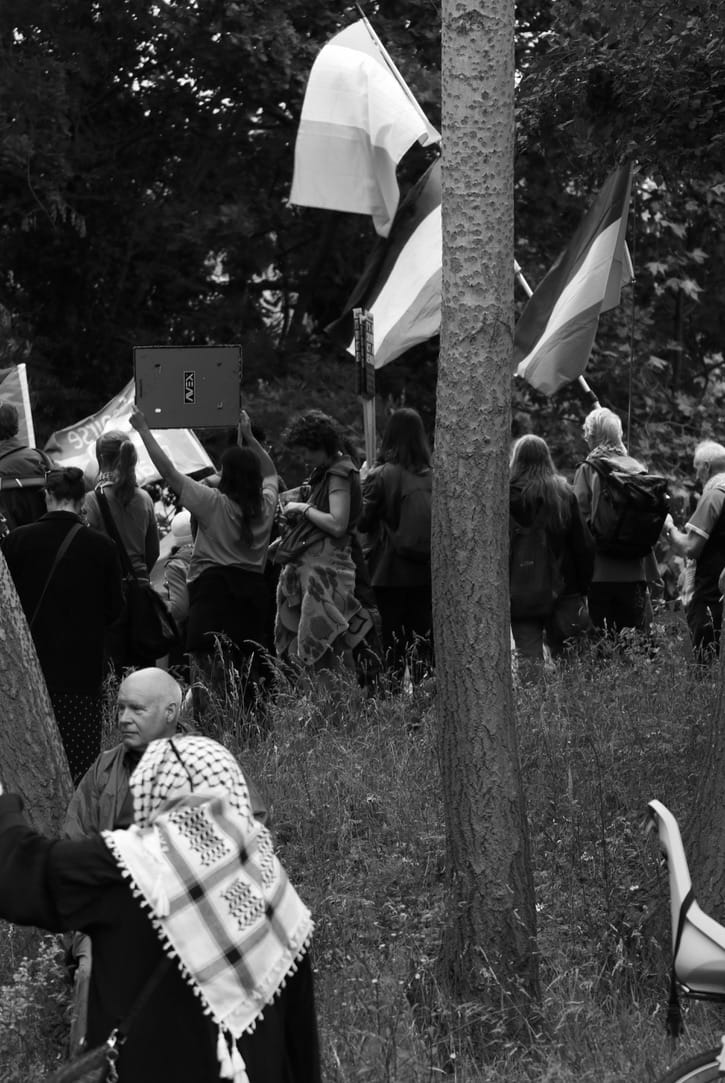
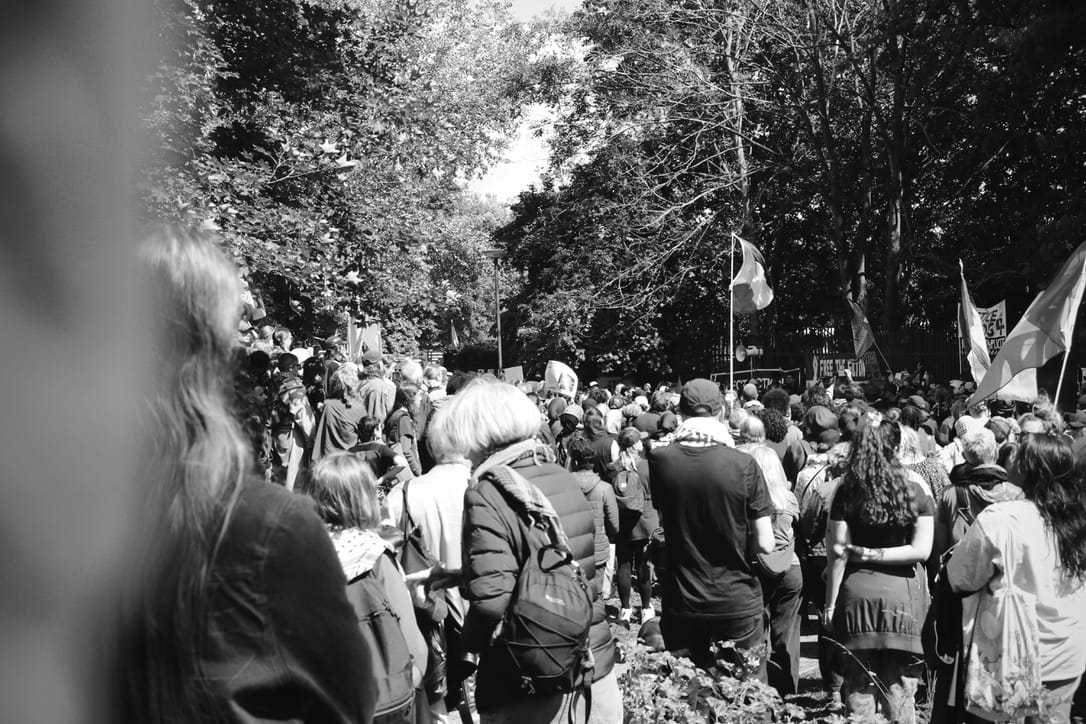
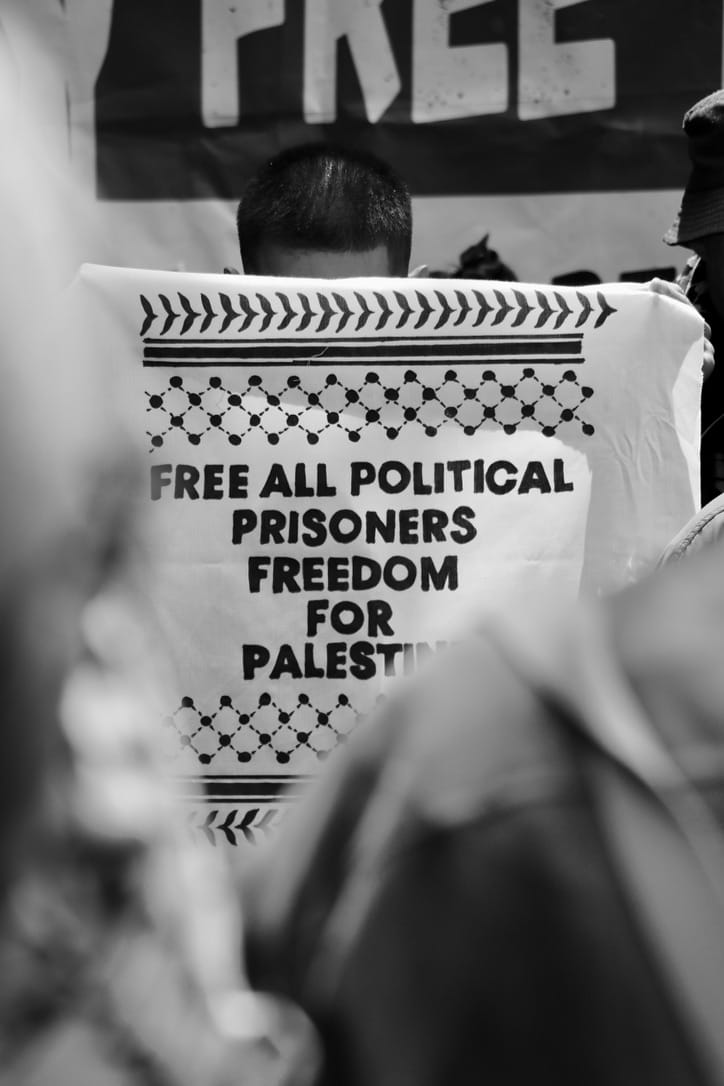
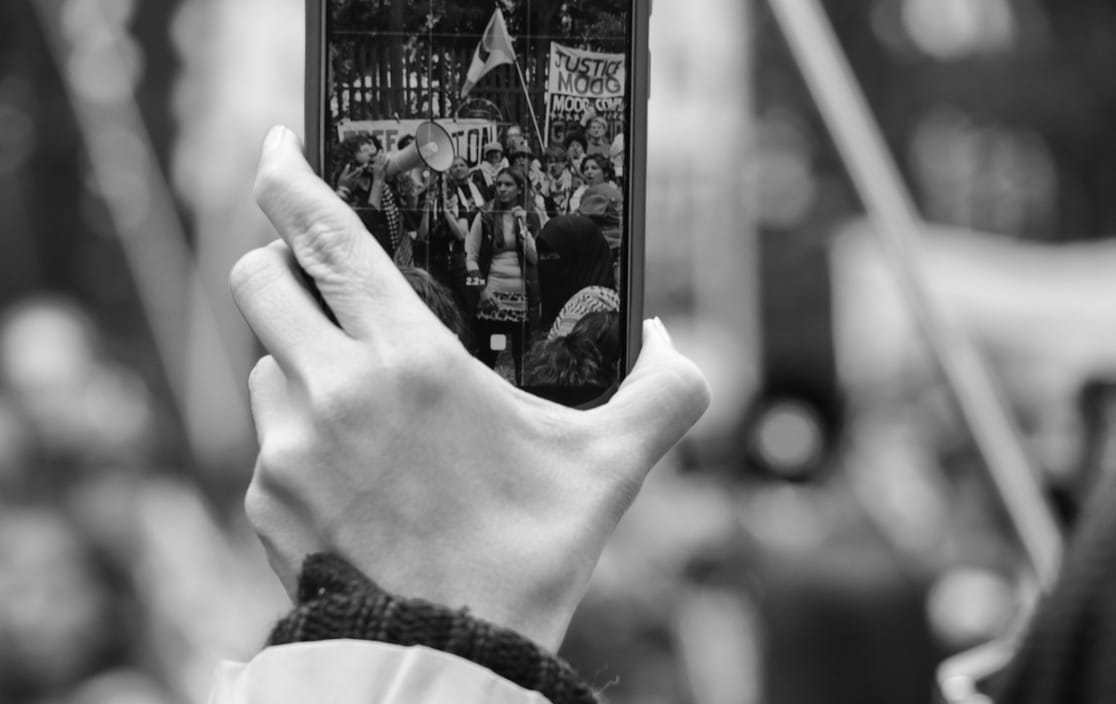
MP John McDonnell, an advocate for the Filton defendants, takes the microphone. He calls the four waiting for their sentences “the conscience of this country at the moment”.
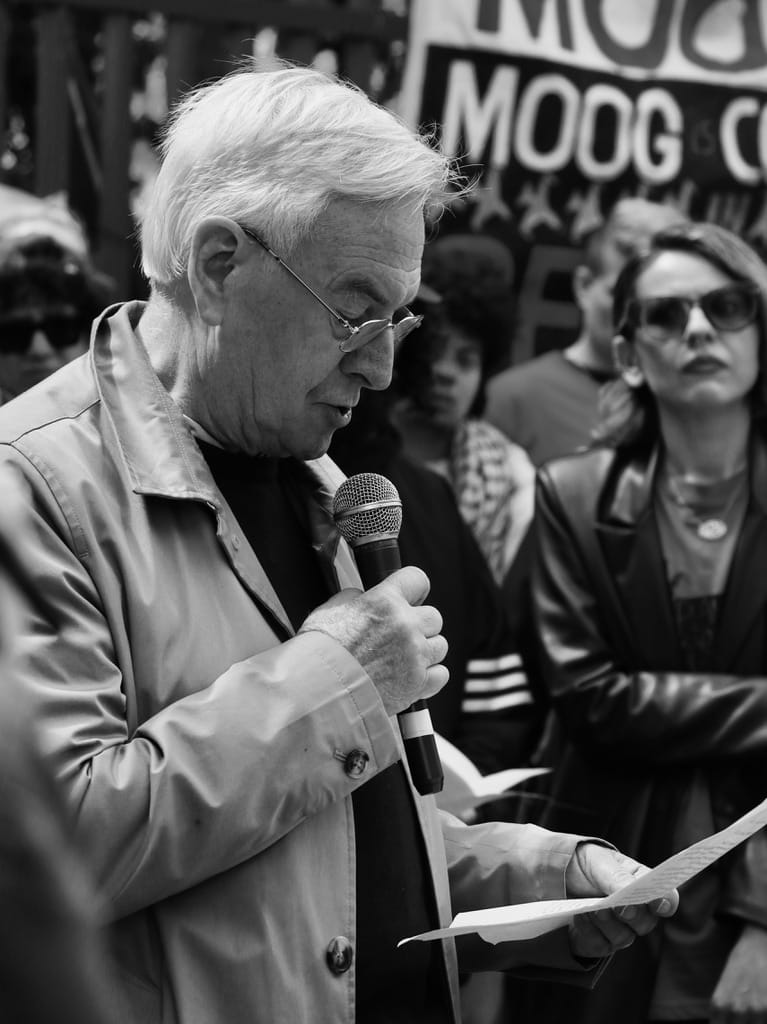
A later speaker is a juror from the first Filton trial, which did not convict any of the 6 of any offences. She shows up to speak out. When she learned of the retrial she “didn’t understand how it could possibly be in the public interest to retry on this minor charge”.
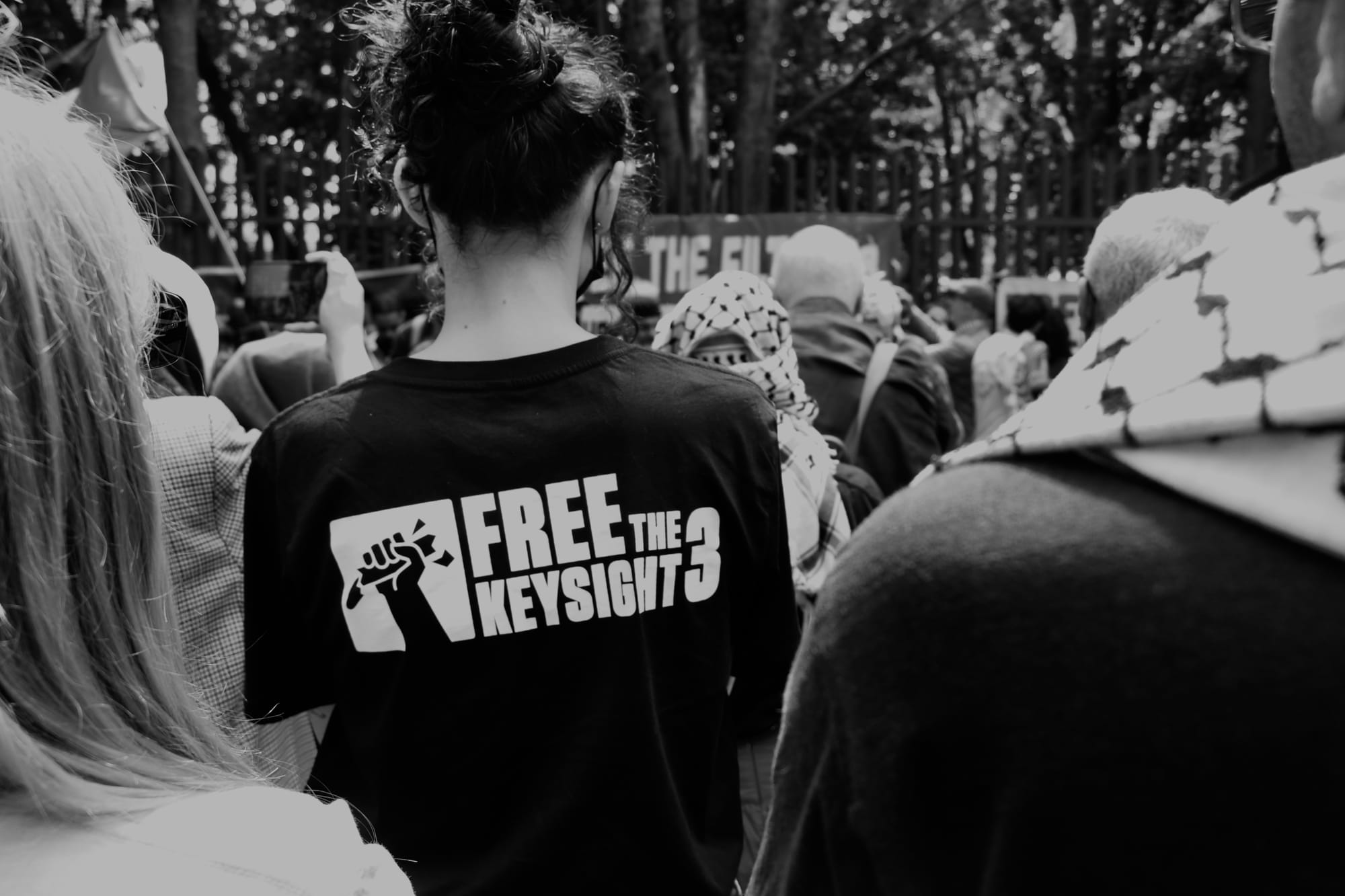
Later speakers included supporters of the ULM 5 –- a group which includes two Britons -–whose ongoing trial in Germany has faced similar accusations of being a “show trial” - and other Filton 25 defendants awaiting trial.
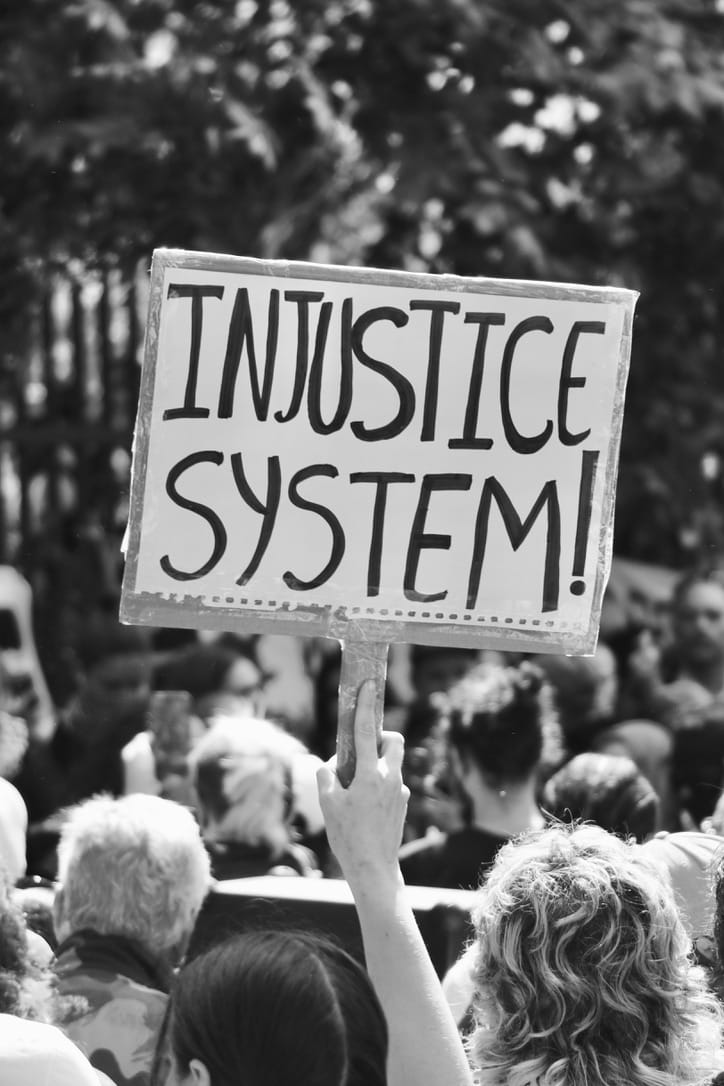
Chants of “You make us proud” reach over the verge, across the carpark and through the court walls. The crowd is told that they can hear the chants inside the court.
Across the intersection, another banner is erected on the walls opposite the entrance to the court. Cars are slowing and beeping their horns in support.
Towards the middle of the day, bus-loads of people arrive with Defend Our Juries (DOJ), who have staged numerous mass civil disobedience actions in response to the proscription of Palestine Action. DOJ demonstrators sit with signs which state support for the proscribed group, rendering them arrestable under the Terrorism Act, punishable by up to 14 years in prison.
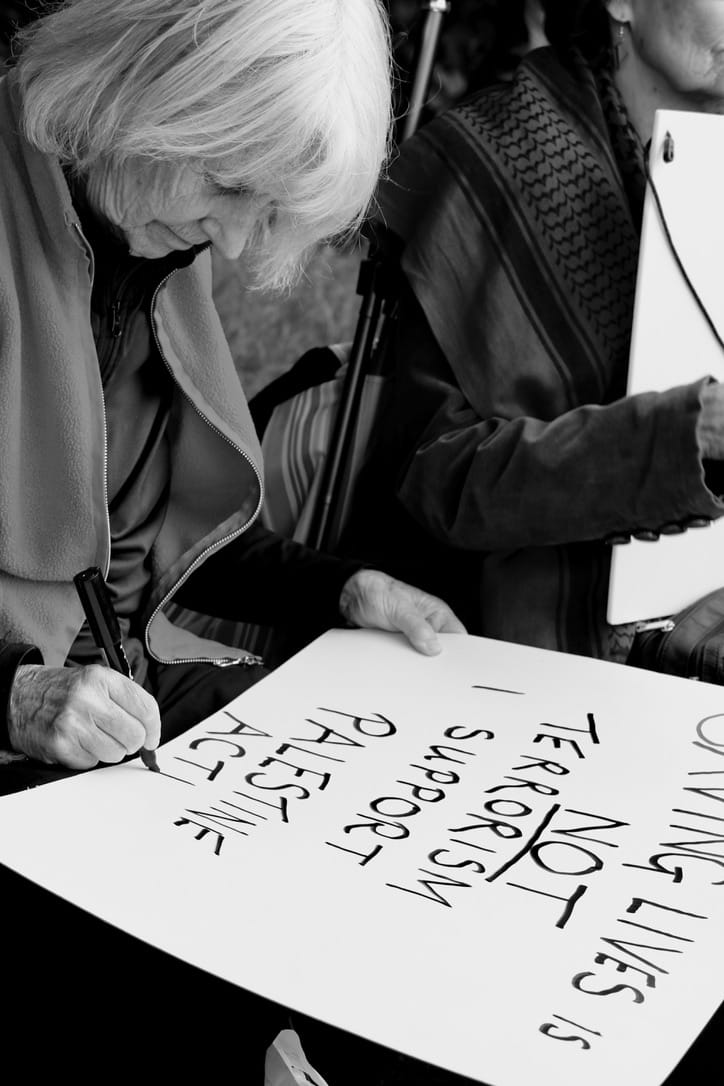
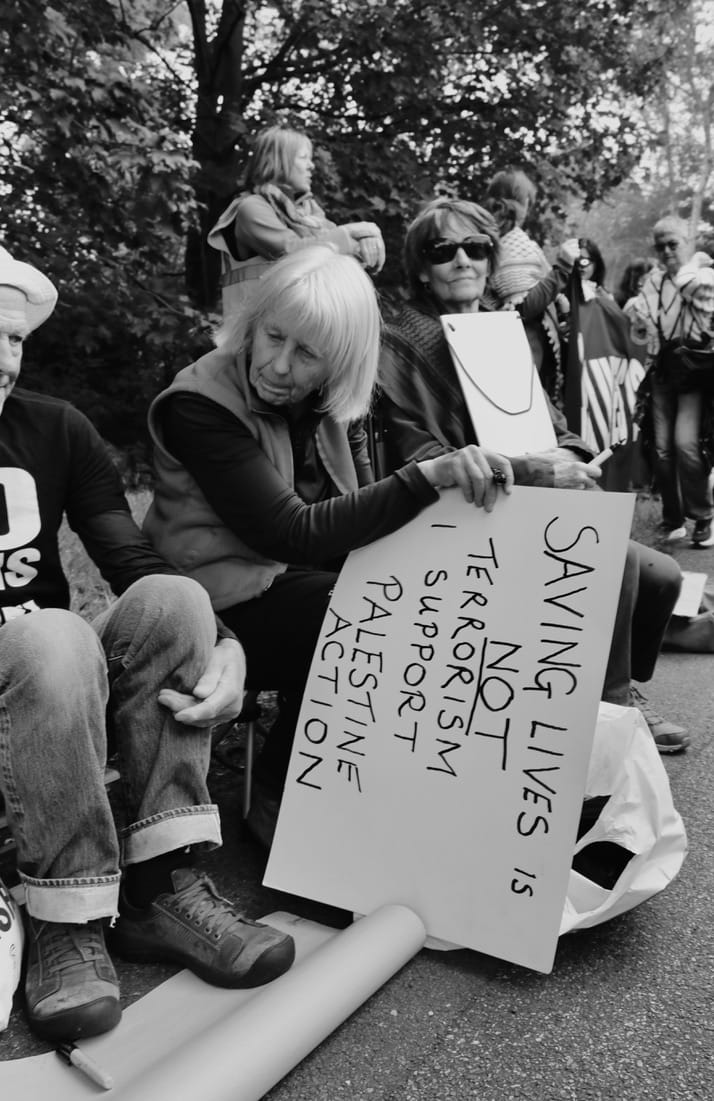
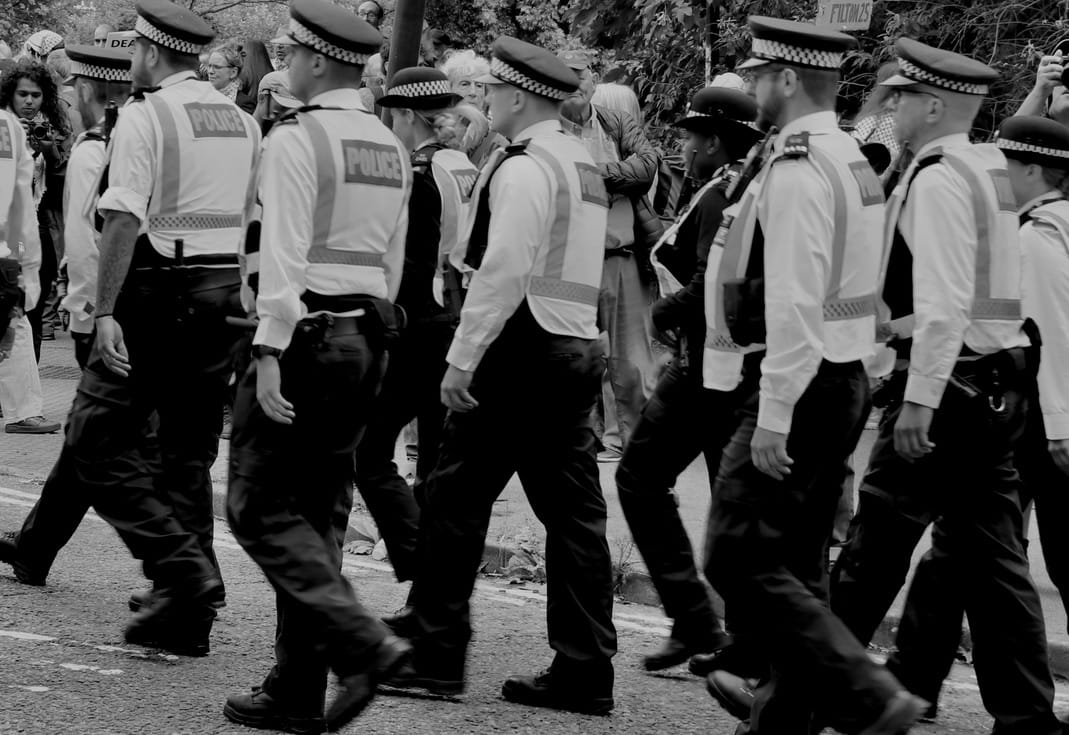
Police – prepared – pour out of the court to meet their colleagues who begin arriving by the van-load. They line the road to match the length of demonstrators and their signs.
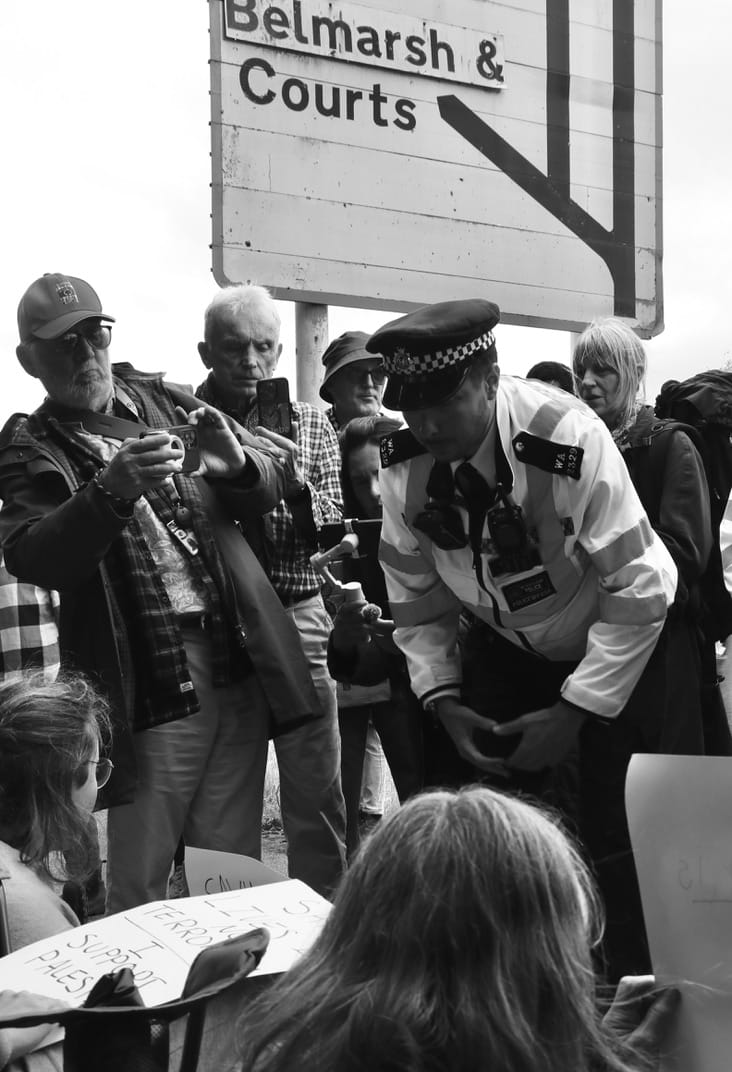
A team of five officers agree on the first arrest, of the line of hundreds performing the DOJ-facilitated mass civil disobedience. They describe, under their breath, one of the younger demonstrators. As one officer talks at her, she looks past his knee and raises the smallest, knowing smile at me. I close my eyes and smile back.
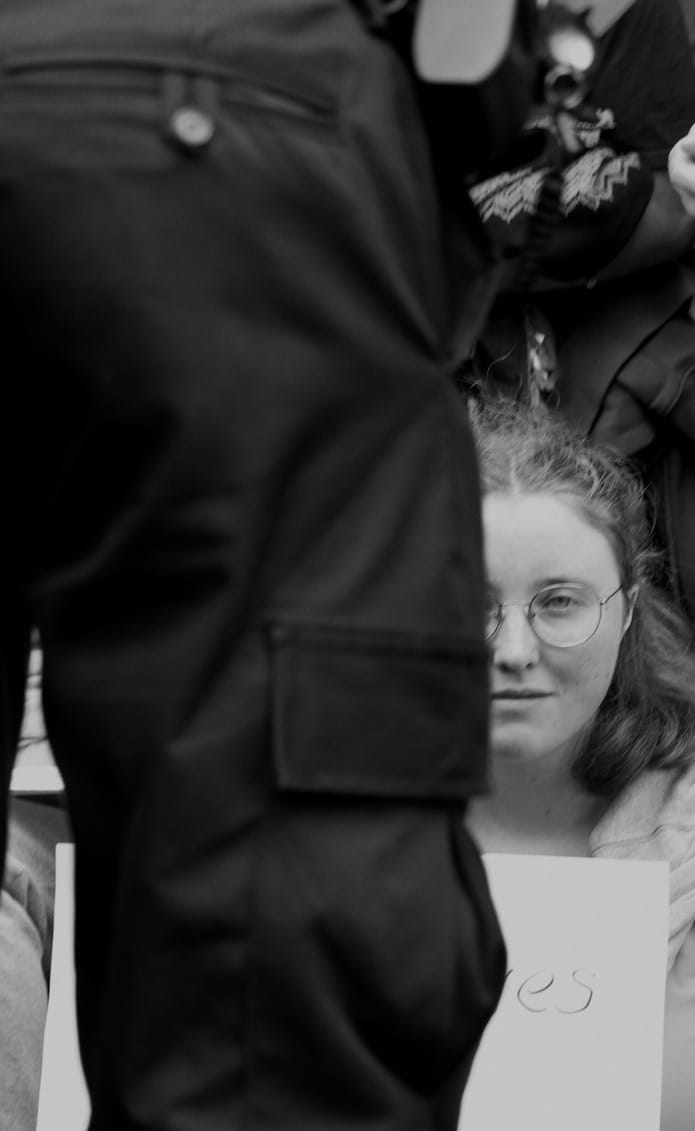
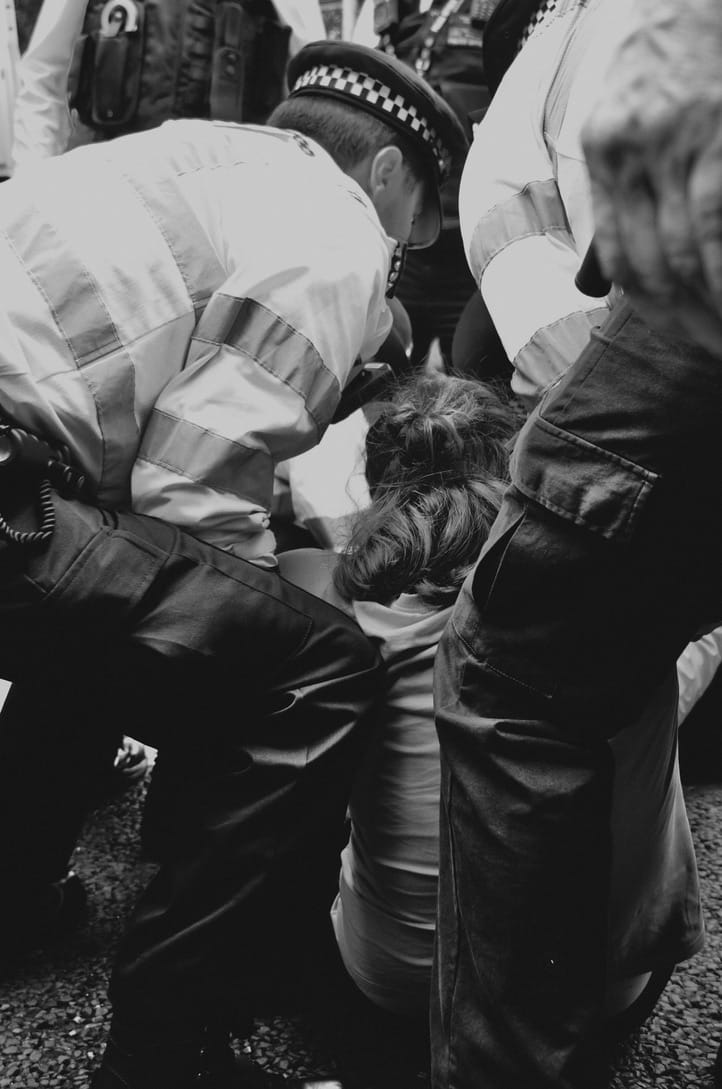
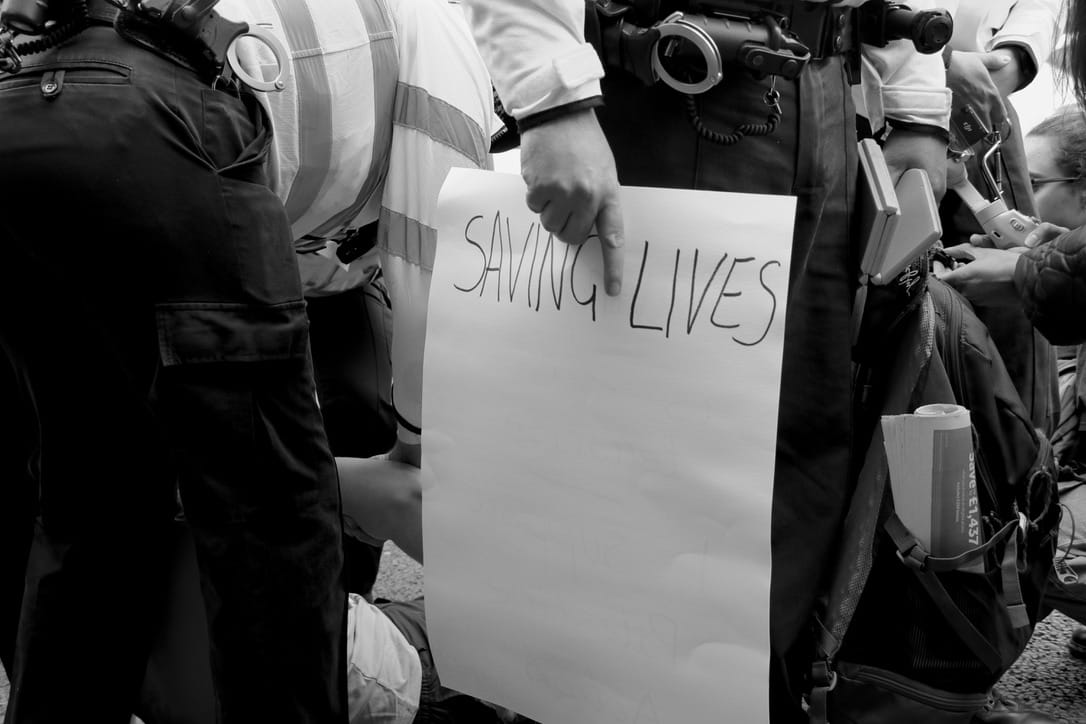
As she’s handled on the tarmac, an officer holds her confiscated sign. On the front, the same message as the hundreds of others; on the back is a first draft – in all capitals, SAVING LIVES. They bundle her feet first into the back of the van.
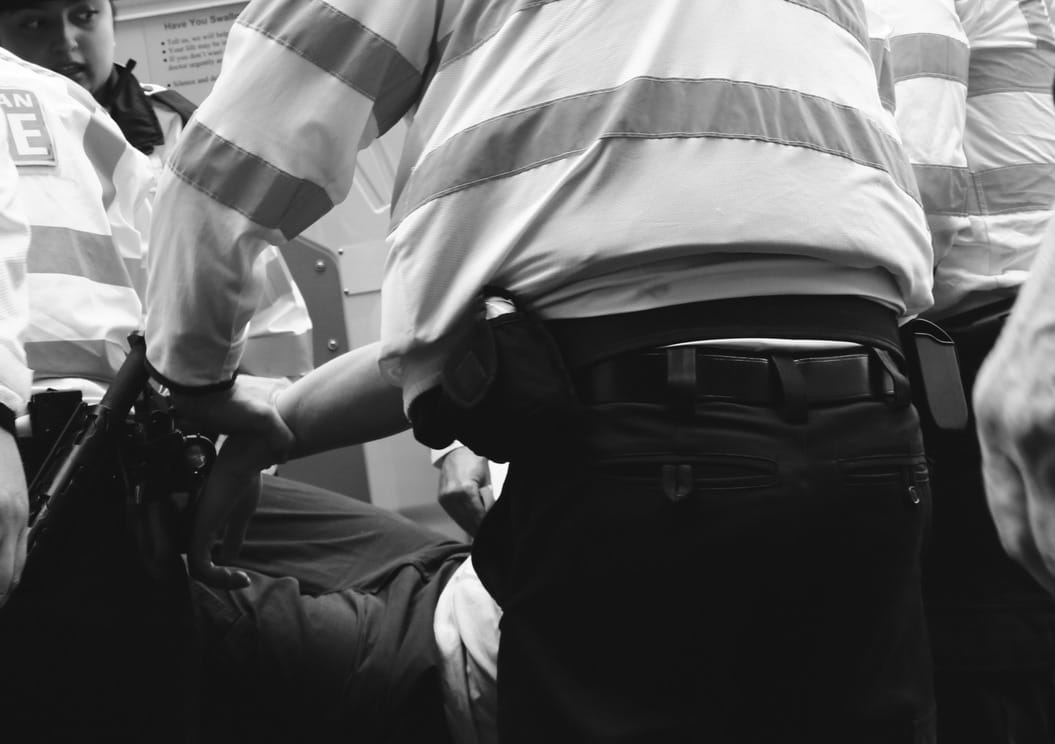
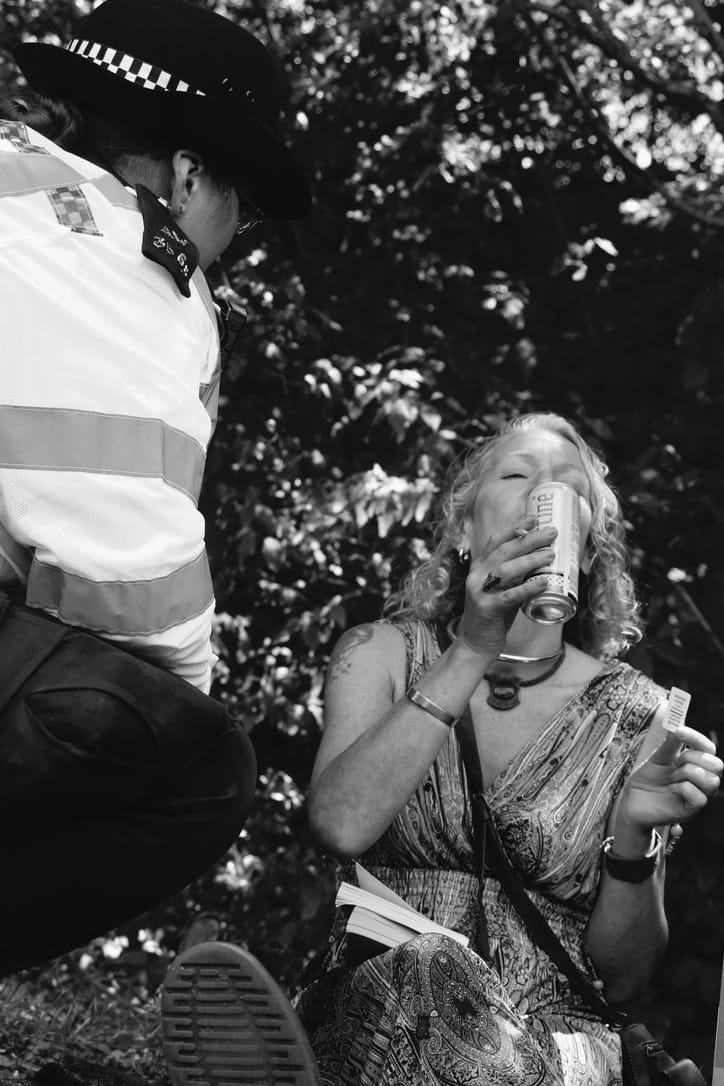
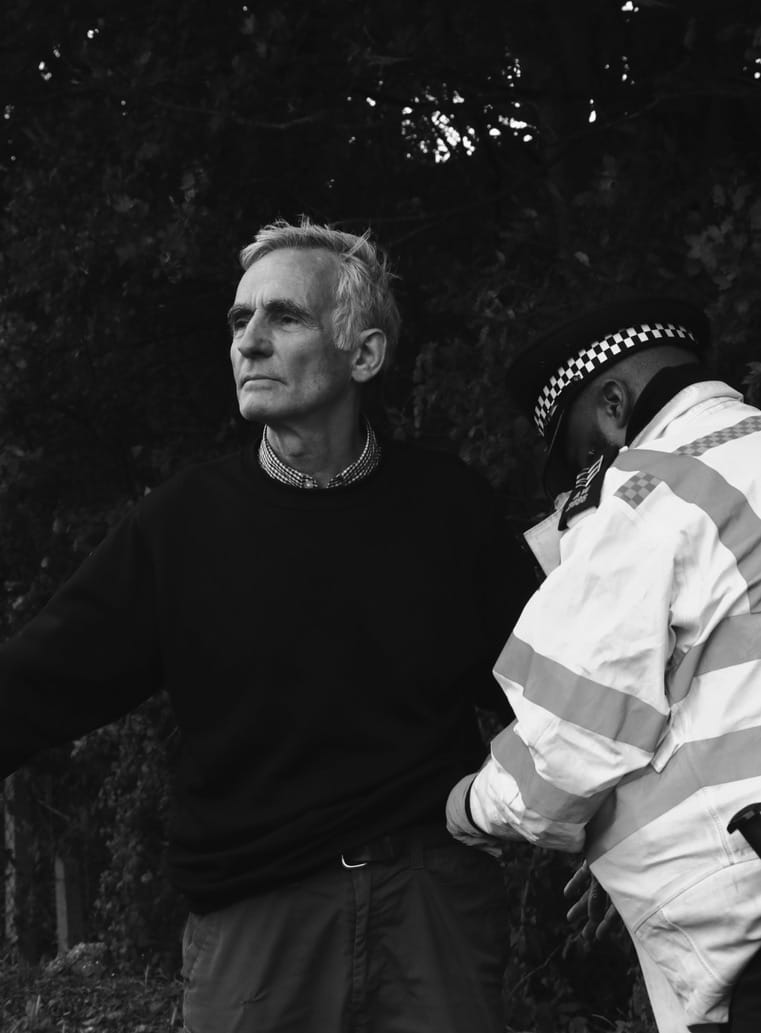
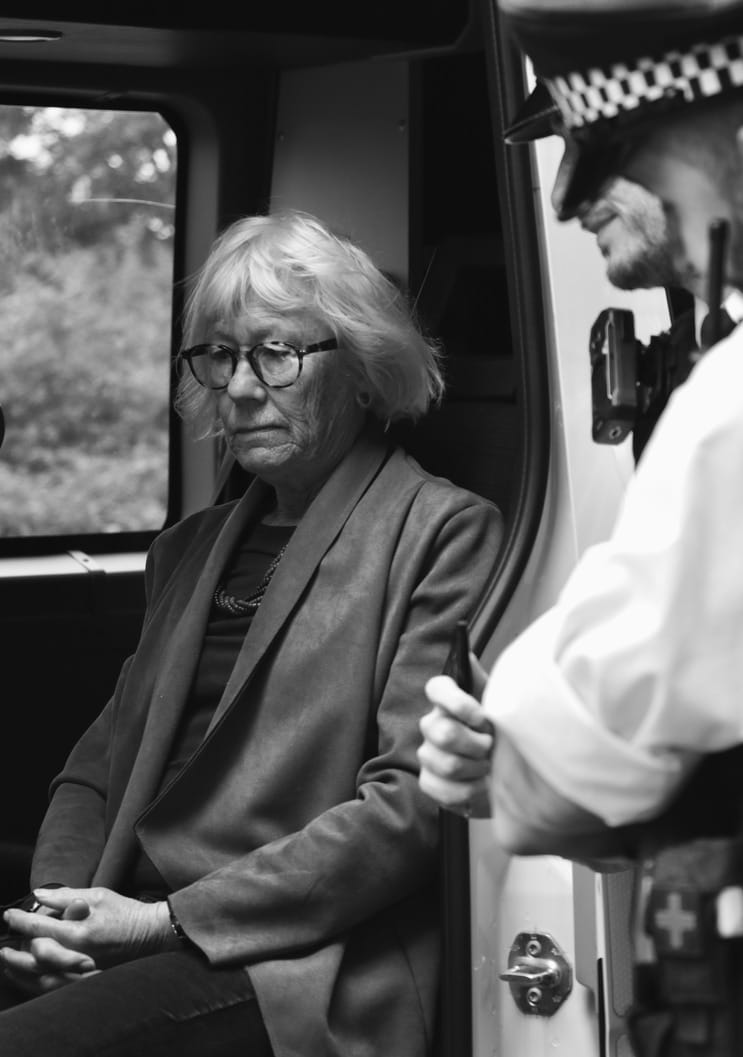
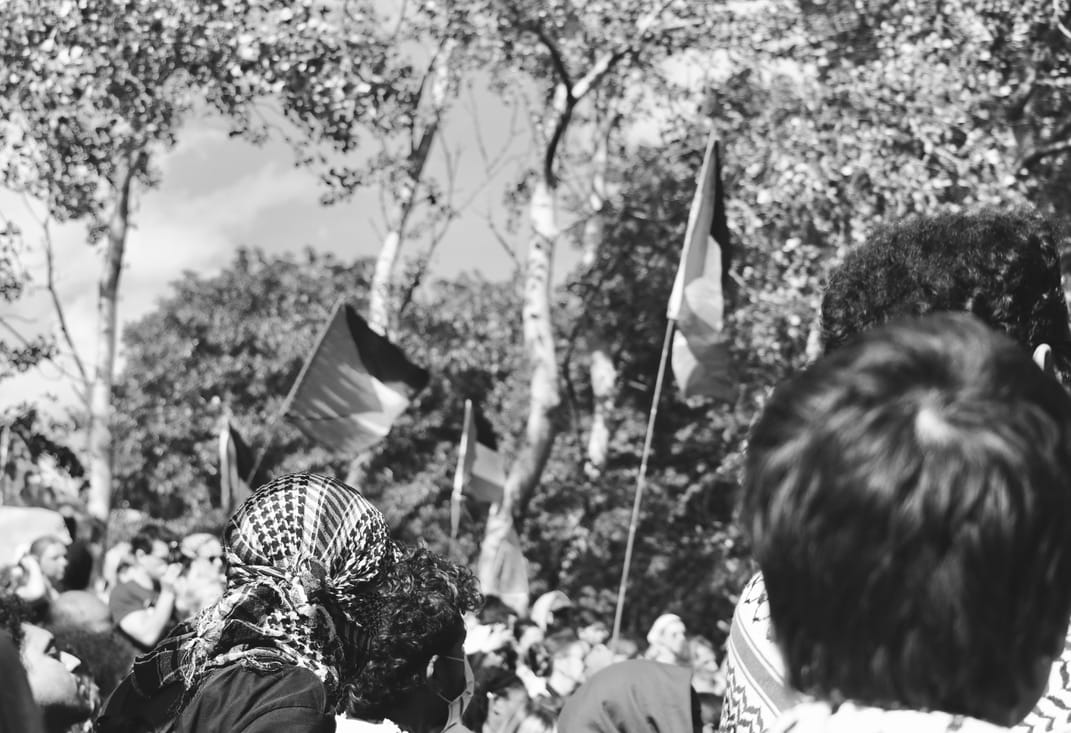
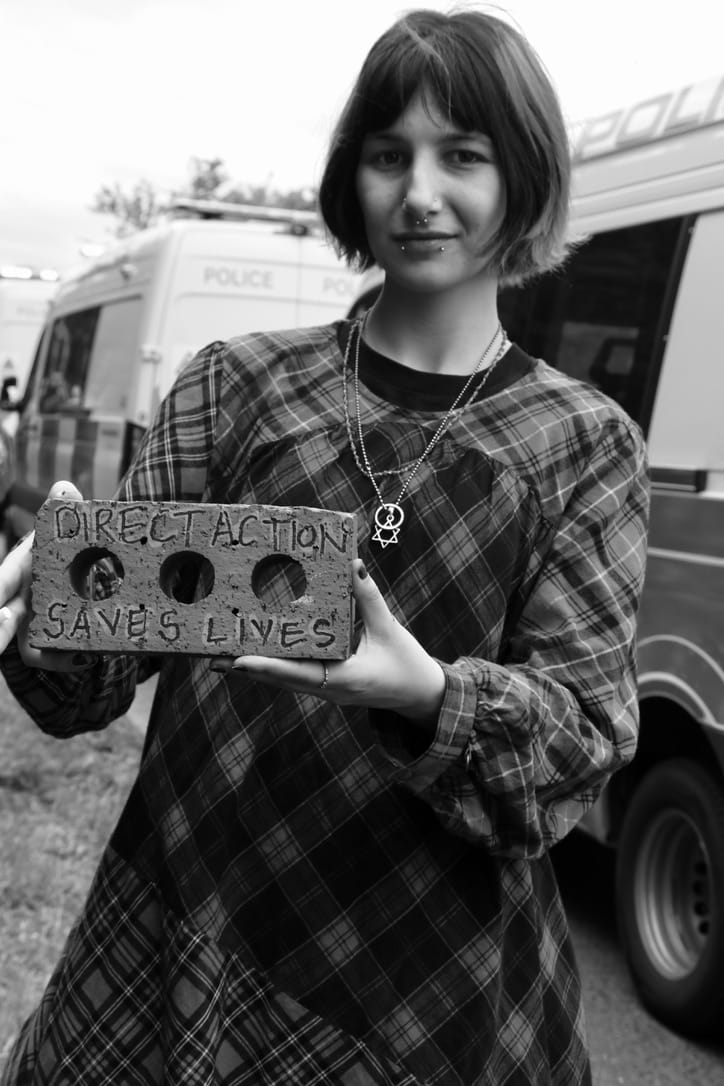
Nineteen police vans line the dual carriageway outside the court, which the Met have themselves shut down themselves in order to park there. As the hundreds of Defend Our Juries arrests continue, one by one, a person with a magen david necklace holds a brick that reads “Direct action saves lives”. Word comes from inside the court around the corner that the four awaiting sentencing had destroyed over 40 significant military assets in the 20 minutes they were inside the Filton site – including quadcopter drones, Kestrel drone, the Magni X drone, Elbit’s Thor drones. These have all been identified as key tools of genocide in Gaza, including for surveillance and targeting to kill.
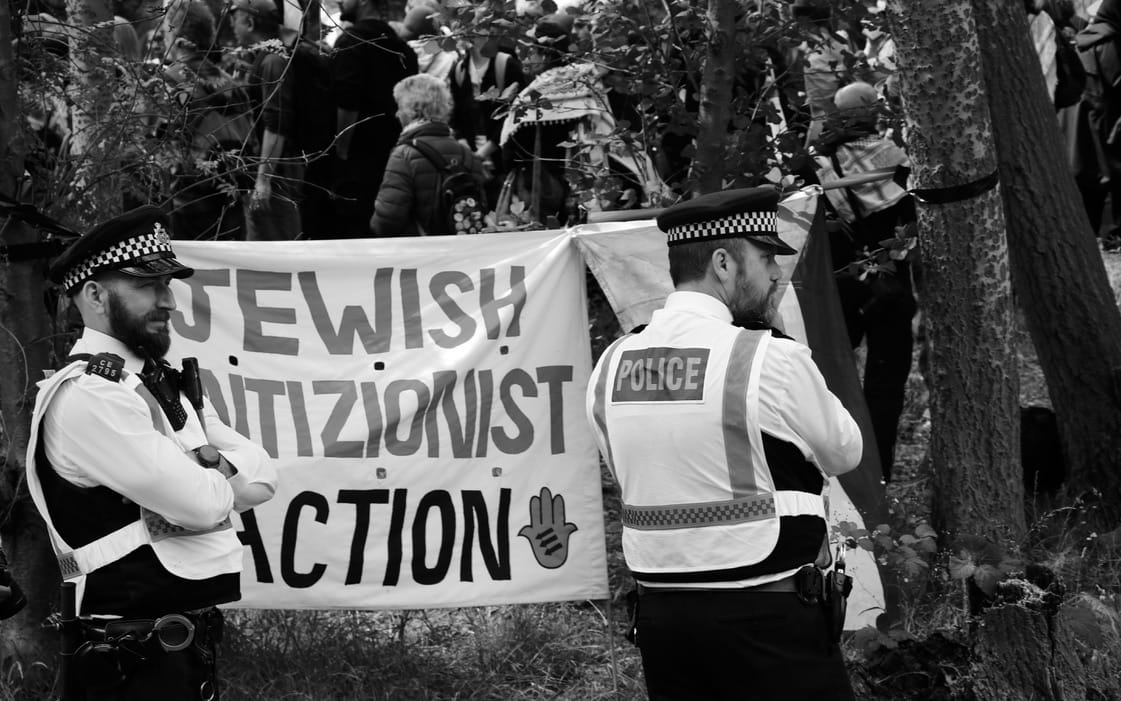
Jewish anti-Zionist groups International Jewish Anti-Zionist Network (IJAN) and Jewish Anti-zionist Action (JAZA) make their presence visible with banners, while there are many more Jewish people there in solidarity, including some taking part in the Defend our Juries action.
Just 48 hours after showing up together in solidarity at Woolwich, JAZA, IJAN and the Palestine Youth Movement (PYM) protested and disrupted the Great Israeli Real Estate Event. Two Jewish activists infiltrated the event and collected the marketing resources handed out to prospective buyers of stolen West Bank property, providing undeniable evidence that property at illegal settlements in occupied Palestinian territory was advertised at the event.
All photographs in this article are credited to and property of Asha Lyons Sumroy. Contact Vashti Media for use.
All photographs share the caption: Filton 4 sentencing, Woolwich Crown Court, 12 June 2026. Credit: Asha Lyons Sumroy.
Author
Asha is an interdisciplinary writer and filmmaker and an Editor at Vashti.
Sign up for The Pickle and New, From Vashti.
Stay up to date with Vashti.