Kahane in our communities
Mainstream Zionist groups may condemn the demagogue’s name, but they embrace his racist politics.
On 26 March, Alexander Heifler, a 26-year-old Jewish man, was arrested in New Jersey on suspicion of plotting to attack Palestinian-American activist Nerdeen Kiswani with molotov cocktails.
Heifler’s membership in the JDL 613 Brotherhood, a New York-based terror network that presents itself as a continuation of Meir Kahane’s far-right Jewish Defense League (JDL) founded in 1968, has brought the extremist group to national attention.
In the UK, only the BBC and the Guardian have reported the story. Yet here, too, Kahane’s influence is pervasive, from far-right street groups to mainstream Zionist organisations. And it’s only getting stronger.
Bombings, shootings, and arson
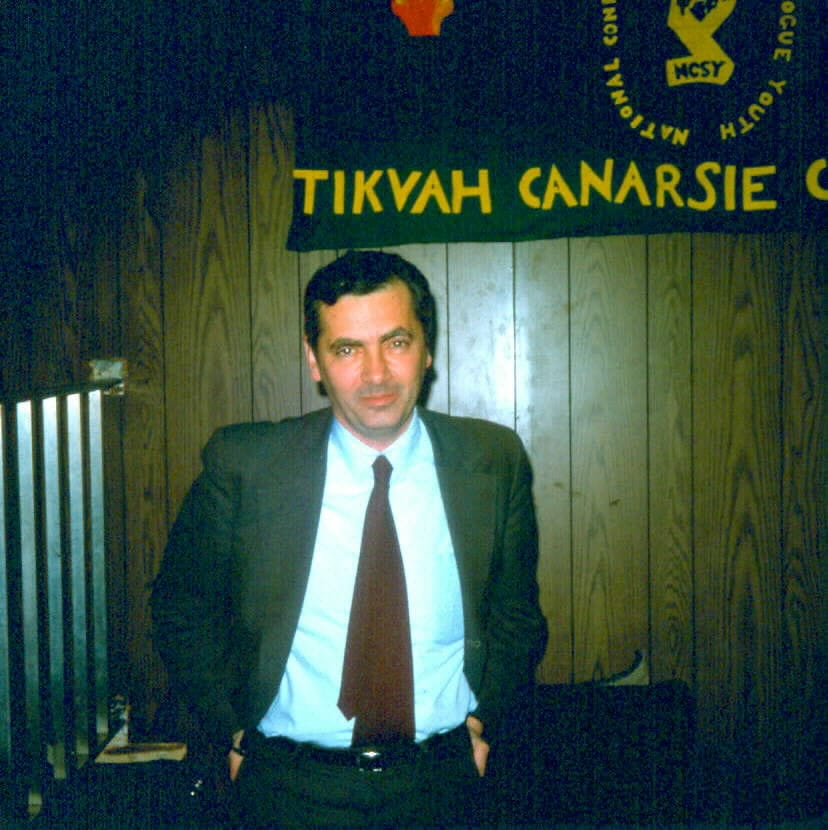
Meir Kahane was a Brooklyn-born rabbi and sometime editor of the Orthodox weekly paper, The Jewish Press. Under his leadership, the JDL carried out bombings, shootings and arson attacks. His favourite target was left-wing Jews.
In 1971, after a series of attacks on pro-Soviet businesses and cultural groups in the US, a court handed him a five year suspended sentence for conspiracy to manufacture explosives. Kahane then emigrated to Israel, where he resumed his political activity and founded a right-wing electoral party which he called Kach. The party condemned democracy as a “gentile” idea and encouraged its members to participate in terror attacks against Palestinians, as well as demonstrations against a range of other groups including Black Jews. Within Kach, Kahane was treasurer, main speaker, sole ideologue and decision-maker. The group’s literature described it, proudly, as “a monolithic body in which no divisions or splits are possible.” Kahane’s supporters won a Knesset seat in 1984 before being banned in 1988 for inciting racism. He was assassinated in 1990, but his followers continued to use violence.
Another member of the Jewish Defense League to travel from New York to Israel was Baruch Goldstein, who had known Kahane since he was a boy. Born in Brooklyn, he studied medicine and signed up for the Israeli Defense Forces. Goldstein stood as a candidate for Kach in 1984, the year that Kahane was elected to the Knesset. By 1994, Goldstein was living in an Israeli settlement, Kiryat Arba, near the Palestinian city of Hebron. On 25 February of that year, he went into the Patriarchs’ Cave in Hebron – a Muslim prayer hall – and shot dead 29 worshippers, including children.
Itamar Ben-Gvir, the minister of national security since the start of Israel’s war on Gaza, is the leader of Otzma Yehudit, or Jewish Power, a party set up to continue the legacy of Meir Kahane and Baruch Goldstein. For many years, he kept a picture of Goldstein in his living room. He boasts of having taken his wife, as their first date, to the cemetery where Goldstein was buried. In spring 2023, Ben-Gvir gave a speech in front of a wall hanging glorifying Goldstein’s killing of Palestinians. Its theme was not the menace of the Palestinians, but Ben-Gvir’s hatred of liberal Jews.
Kahane is a guru of the present-day Israeli right. Crucially, however, his racism against Palestinians was formed entirely in the US, and only later exported to the Middle East.
No end in sight
Kahane was radicalised by the New York teachers’ strike of 1968. When a neighbourhood school board established a new school district in a mostly Black area, they dismissed 13 teachers and administrators from a local junior high school to enable Black teachers to replace them. Led by Albert Shanker, the United Federation of Teachers (UFT) demanded reinstatement for the teachers and accused the school board of antisemitism – the sacked teachers were all white, some of them were Jews. The teachers went on strike, closing the city’s public schools for 36 days. The state’s education commissioner asserted control over the school board, reinstating the sacked teachers – but leaving unaddressed the underlying problem of a preponderance of white teachers in Black schools.
The strike polarised the city’s Jewish population across left and right lines; leftists argued that Jews did not suffer as Black people did, and therefore that the teachers’ union had chosen the wrong side. The right saw the struggle differently.
Kahane took the union’s logic and went further. There was just one great enemy in the world. It was those leftists of any background (but especially his fellow Jews) who put themselves in the way of what he considered Jewish power. For the rest of his life, he would wage a war against Jewish empathy.
His JDL imitated the style of Black Power groups, with Kahane representing himself as a Jewish Panther (“We have a reputation, spread by our enemies, that we are Jewish Panthers. Never deny it!”). It went on the offensive, hoarding guns (“Every Jew a .22”) for use against those Kahane considered to be antisemites, and manufacturing explosives to deploy against leftists he considered enemies of the Israeli state.
This is the approach that the JDL 613 Brotherhood seeks to revive today. On 9 April this year, a further report in the Guardian disclosed recordings of the Brotherhood’s founder, Yisrael Yaacob Ben Avraham, calling New York’s democratic socialist mayor Zohran Mamdani a “Muslim terrorist”, a “cancer”, and his election a “harbinger” of “a creeping Islamic takeover of America”. The Guardian reported that the Brotherhood has sought to cash in on the allegation that its members were involved in acts of terrorism, using the attention to sell t-shirts saying “Jewish Power” along with graphics of a skull, a Star of David and crossed baseball bats.
At his core, Kahane believed that all politics is about competition, and the way to win was to establish the most compelling claim to victimhood. In the case of Jews living in postwar America, this meant lying about the extent of the danger they faced and persuading them that Jews faced an imminent second Holocaust unless the JDL defeated it first. In Israel, he believed in fighting without end, removing Palestinians from the land, and killing those who refused to leave. There is no right in politics; “there is only self-interest”.
Be remembered as a disgrace
Kahanism was not just an American-Israeli phenomenon. On the formation of the English Defence League in 2009, activist Roberta Moore formed an EDL Jewish Division – later the Jewish Defence League UK. She told Haaretz journalist Shaul Adar that her enemy was “anti-Zionist organisations”, explaining that she liked to send such groups threatening letters, “then we take action to expose them.” Moore was a racist, who called for all Muslims to be deported. She had also picked up Kahanist talking points – lies intended to shock anyone listening with the brazenness of their untruth. She told Adar, “There were no Muslims in the Land of Israel in the 19th century.”
Moore offered Tommy Robinson a service; she would go on EDL marches, waving an Israel flag. In return, he could say that his organisation was unlike the BNP, the party he’d left four years before. Robinson organised meetings with Moore, then had to distance himself from her after she boasted of her links to Victor Vancier, a US-based Kahanist who had served five years in prison for 18 bomb attacks in New York and Washington. In 2014, Moore joined a physical attack on the Palestine Literature Festival when her friend, Robert de Jonge, punched event organiser Andy Simons in the face and she sprayed Simons with dye.
Jewish communal groups across the political spectrum have portrayed Kahanism as extremist. When the EDL was launched, the Board of Deputies, Community Security Trust and Jews for Justice for Palestinians all signed up to a joint campaign under the slogan, “Not in our name - Jews against the EDL”. In 2022, the Board of Deputies of British Jews briefly turned on the Kahanist MK Bezalel Smotrich; after he tweeted that he’d be meeting rabbis, community leaders and Jewish organisations in the UK, the Board responded, “get back on the plane Bezalel, and be remembered as a disgrace forever.”
Too few of the communal voices who once spoke out against the importation of Kahane’s politics to London criticise the destruction of Gaza or the killing of tens of thousands of Palestinians. Yet it’s hard to see anything other than continuity between Kahane’s goals, the presence of his supporters in government, and Israel’s current plans for Gaza. “Most of the Gaza Strip,” writes the architect Eyal Weizman, “cities, refugee camps, schools, universities, mosques, the health infrastructure, agriculture, wells and the soil itself – has been destroyed and made toxic by bombs, artillery, tank shells”. More than half of pre-2023 Gaza is behind a Yellow Line which Palestinians may not cross, on its eastern side the Israeli army has built 48 outposts. Gazans are in a territory ever-shrinking and ever less habitable: Kahane would be jubilant.
The Jewish Chronicle has spent the last few weeks criticising Britain and Europe for failing to back Israel’s war in Lebanon. Daniel Finkelstein, trustee of the Community Security Trust, describes how at the start of the war on Gaza, he “resolved to support whatever action was necessary to prevent a repetition” of October 7. By that logic, over two and a half years down the line, what “dismays” him is not the war but the willingness of the war’s opponents to go on marches and call for a “Free Palestine”. It was with enthusiasm that community leaders invited Nigel Farage to join their protest against antisemitism. No party leader in Westminster history has been as openly antisemitic as Farage, but he is an ideological ally of the Israeli regime, so he is treated as a friend.
Kahane’s successors in present-day Israel are required to operate under new names. In Britain and America, mainstream Zionism continues to frame Kahane’s descendants as a force for evil. In New York, Alexander Heifler is still on remand. But the political parties of the European and US left, and the journalists who write for their publications, continue to interpret the politics of anti-Jewish racism through an ideological lens provided by Israel. Well-meaning liberals cling to positions – the idea that antisemitism is universal, and that exaggerating the danger to Jews is a legitimate move – which came straight from Kahane. Thirty-six years after his death, Kahane’s extremism has returned to the diaspora and warped our reality.▼
Author
David Renton is a barrister and historian and a member of rs21. His latest book is Revolutionary Forgiveness.
Sign up for The Pickle and New, From Vashti.
Stay up to date with Vashti.