The hunger strikers are in mortal danger. But the conditions they’re being kept in are already critical.
How the government and its prisons ignore strikers' basic rights and demands.

Last week, I was approached by a friend asking me for help. They are working to oppose the media’s deliberate silence about the ongoing prison hunger strike; their friend, Amu Gib, is one of the strikers. They asked if I could write about it. I relayed a few questions to Amu through my friend, while researching and talking to people within the small but dedicated UK pro-Palestine media ecosystem. The limited coverage available in mainstream media persists in focusing on the stories of specific strikers and their worried relatives, rather than their demands and position as political prisoners. This piece draws heavily on the force of Amu’s testimony – but we wished to avoid it becoming Amu’s story, rather than the story of the strike.
I am an analyst, not a reporter. The urgency of the strike requires a fast response, but it also requires a thoughtful and interrogative one. This piece reiterates the strike and the response it demands, but is also a wider analysis of the politics of the prison, the history of the hunger strike, and of how this particular strike in its particular context reveals the imbrication of different forms of liberation struggle.
No news outlet has yet recognised, for instance, that two of the eight strikers are trans, and that their treatment as trans pro-Palestine prisoners reveals the contradictions of the UK prison system, which casts the Palestinian cause as “terror” against protected minorities whilst propagating terror on minorities who adhere to that cause.
The strike is not being attended to by those in power; it is being dismissed and shrunk from. Here, I attend to it as a complex and internationally-focused action, one which connects many different groups of people through a shared struggle for life and liberty, and assert how we need to respond.
The hunger strike
The largest coordinated hunger strike since Bobby Sands is currently taking place across five UK prisons. Five hunger strikers have now been hospitalised; as the strike has now passed the one-month mark, the strikers risk permanent bodily damage or death if the government does not swiftly negotiate with them.
But most UK media outlets and UK politicians appear to be attempting to ignore the strikers until they are too weak – or worse – to negotiate, because the strike is for Palestine, the strikers are prisoners on remand because of actions they have allegedly taken in support of Palestine, and their demands target the UK’s facilitation of the genocide in Palestine. The Northern Ireland strikers in 1981 partially succeeded in winning their demands, but only after ten strikers had died.
As I write this (on 11 December 2025), six people have now been on hunger strike for between 31 and 39 days: Qesser Zuhrah, Amu Gib, Heba Muraisi, Jon Cink, T Hoxha, and Kamran Ahmed. (A seventh, Muhammad Umer Khalid, joined a week ago, while an eighth, Lewie Chiaramello, is fasting every other day due to diabetes.) For context, this is an open-ended hunger strike, and the Northern Irish strikers – including Sands – died after between 46 and 73 days on hunger strike. Most of the strikers have already been hospitalised; Prisoners For Palestine, an organisation representing all those detained under charges related to Palestinian liberation, reports that some of the strikers are unable to stand. If the strikers’ demands are not met, some of the strikers seriously risk not seeing 2026.
This group of prisoners are all awaiting trial for their alleged involvement in one of two Palestine Action protest actions, both of which took place before the organisation’s proscription this summer. In the first action, activists allegedly damaged equipment and property at Elbit Systems’ weapons factory in Filton in August 2024. In the second action, in June 2025, RAF Brize Norton was allegedly entered and red paint sprayed onto the engines of refuelling planes used in British air attacks in the Middle East. None of the defendants have accepted the charges against them.
All of them are charged with crimes that do not justify breaking the normal maximum remand limit (of six months) – criminal damage, aggravated burglary, violent disorder. Yet several of them have already been in prison for over a year, where they describe systematic mistreatment for their association with Palestine Action, and an escalation in that mistreatment following the organisation’s much-contested proscription in July.
One striker, T Hoxha, already completed a separate 28-day hunger strike in August to protest her “retrospective punishment” after the Palestine Action proscription, which included being deemed “inappropriate” to continue her job in the prison library. Her report for Electronic Intifada depicts an environment in which guards are on a hair trigger around Palestine, telling prisoners that “free Palestine” is terrorism and confiscating keffiyehs and scarves in “Palestine colours”.
We do not seek martyrs.
The individual stories of the prisoners, their families, their lives, and their faces, which have been the focus of most existing media coverage, can have the effect of pulling focus away from their reasons for striking. And hunger strikes, like suicide, can be politically romanticised by some allies of the cause; they may be seen as a poetic renunciation of the world and its horrors.
But the strikers are of the world. They are refusing food as a strategy, one of few strategies available to them in their incarceration, to push for five specific demands. The demands are their priority.
We do not seek martyrs. The activists must live; the government must accede to their demands. Their demands have been treated by some as unworkably radical, but should not be viewed as such. They have been artificially – tactically – made to seem radical by the UK government’s financial investments in the annihilation of Gaza, and political investments in designating anti-genocide activism as terrorism. They have also been artificially made radical by the unacceptable conditions in UK prisons and immigration detention centres, where a cruel and Kafkaesque system of power has left prisoners with few options to resist mistreatment.
The strikers’ demands are almost all restatements of basic rights, protocols and conventions, such as the protocol for maximum remand length and the government’s previous commitment not to proscribe direct action groups. These are their demands.
- End censorship of prison materials
Prisons are using their powers to monitor and intercept prisoner communications – calls, letters, books, etc. – to restrict prisoners’ political activity and punish them for self-expression. Visitors have described having to avoid words like “Palestine” for fear of intervention.
- Immediate bail
The Filton 24 and other PA-associated prisoners have not been convicted of any crime; they are imprisoned on remand while awaiting trial. The standard legal limit for being imprisoned on remand is six months; some of the Filton 24 are currently on track to spend two years in prison pre-trial. The hunger strikers demand their release from custody while they await trial.
- Right to a fair trial
This is, in practice, a demand for the release of various documents that are relevant to the upcoming trials: “This includes all meetings between British and Israeli state officials, the British police, the attorney general, Elbit Systems representatives, and any others involved in coordinating the ongoing witch-hunt of actionists and campaigners. We also demand the release of government records of all Elbit Systems UK exports from the last five years.”
- De-proscribe Palestine Action
Prisoners For Palestine opposes “the use of counter-terror laws to target those engaged in protest and direct action”, and demands the de-proscription of Palestine Action, the dropping of all “terror-related charges” and “links’’ imposed on those who have allegedly been involved with Palestine Action, and an apology from Yvette Cooper, who has claimed that PA is violent and “possibly funded by Iran”.
- Shut down Elbit Systems UK
Israeli weapons manufacturer Elbit Systems, which supplies 80% of weapons and equipment to the IDF’s land forces and most of Israel’s combat drones, has 16 sites in the UK. The strikers wish for Elbit Systems’ UK sites to be permanently shut down; where the government is concerned, this demand specifically focuses on the cessation of government contracts with and ties to Elbit. Earlier in 2025, the Ministry of Defence was considering Elbit for a proposed £2bn contract to provide training to 60,000 British soldiers per year. It is unknown whether Elbit has been awarded this contract; Elbit announced in November that they had signed a $2.3bn contract for undisclosed services with an undisclosed buyer, but whether this relates to the proposed UK deal is unknown.
The hunger strikes seek to manifest a small reflection of the violence wreaked by Israel on the Palestinian people, particularly their forced starvation. Many activists across the world, such as in Greece, Tuscany, and the US, have used this tactic for the expression of solidarity or to make demands. The prisoners’ strike is different from these other strikes, which were more symbolic and took place under conditions of greater liberty, but they share a similar shape – a refusal to continue as normal, to self-sustain, until critical conditions are responded to. The strike is targeting the critical conditions of both the Palestinian and the non-Palestinian prisoner.
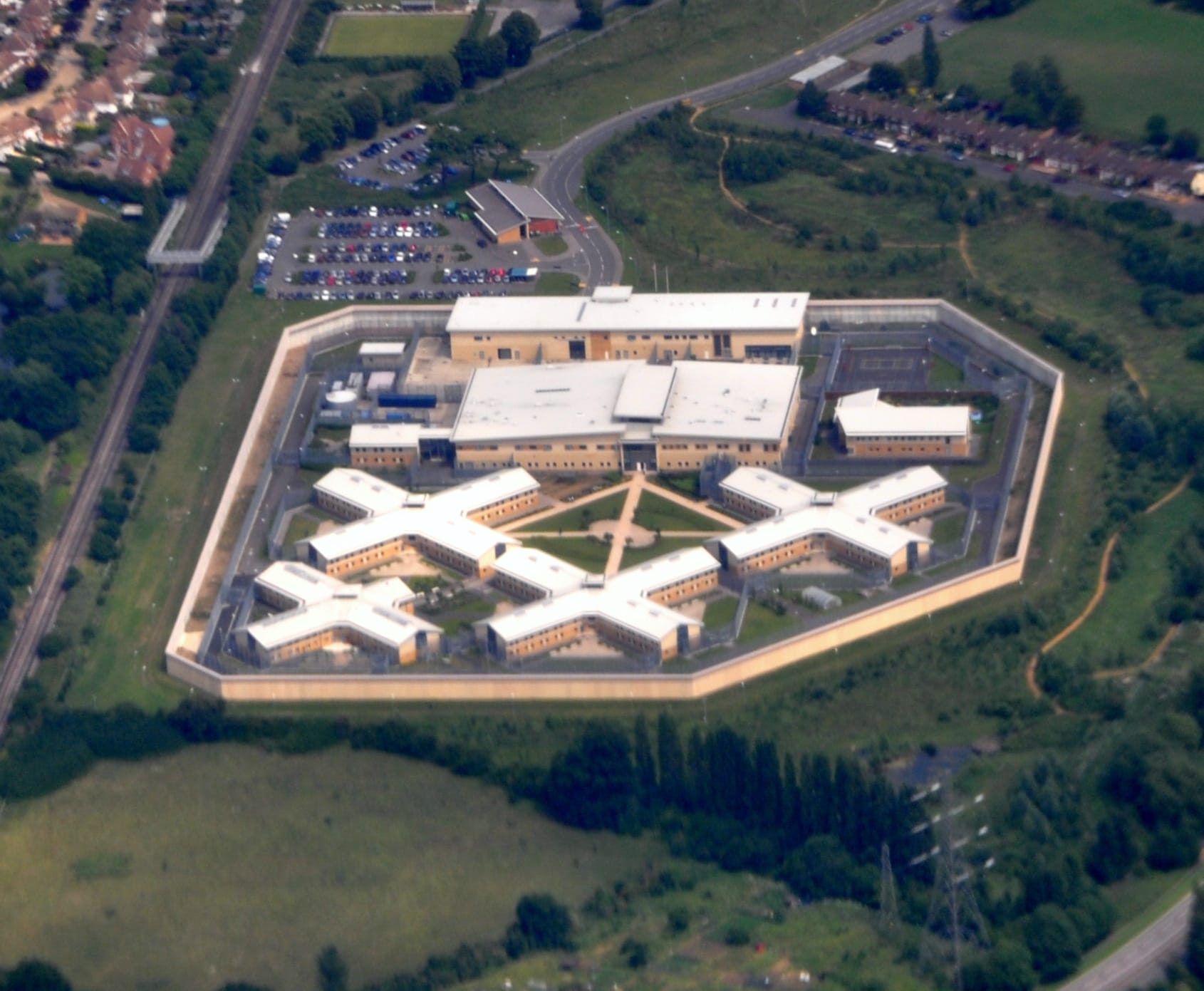
British prisons are already unbearable places. Three of the hunger strikers are in HMP Bronzefield, where this past July, two prisoners, Toni Asik and Tracey Dyke, died in the space of a week. (Two other strikers, T Hoxha and Heba Muraisi, were moved without warning from Bronzefield to other prisons this summer.)
Toni was suicidal and was supposed to be on a 15-minute active watch, but was left unchecked for an hour during a shift change; it is believed that he died during this period. Tracey was reportedly in the detox wing and died less than 12 hours after being remanded.
The View, a magazine dedicated to incarcerated women, has since reported that the healthcare unit Toni was placed in “is notorious for neglect, dirty conditions, and dehumanising treatment […] Women in crisis have reported being held like animals in cages, ignored when they cry for help, and forced to resort to dirty protests to have their voices heard.” Here is crystal-clear evidence of conditions so dire that prisoners are forced to fight with the most basic tools they can access, even human waste.
Prisons and Palestine, Prisons and Transness
I want to draw attention to a specific web of connections here. Palestine, as a majority-Muslim country, is continually smeared by Zionists as murderous towards queer people and women, in supposed contrast to the sunnily pinkwashed Israel. Prisons, meanwhile, are an intense site of anti-trans battling, with anti-trans activists claiming that trans women must be placed in men’s prisons for the sake of cis prisoners’ welfare.
HMP Bronzefield is a place where the brutal contradictions of that worldview are made manifest: it is a women’s prison whose prisoners report being treated like animals, and where women and queer people who support Palestine are harassed and censored for those views, all in the name of their own supposed safety against the danger Palestine supposedly represents. And all the while, people, including women and queer people, are still being killed in Palestine post-ceasefire, not by a fictitious Palestinian death machine, but by a real Israeli one.
Toni Asik was a trans man who was reportedly misgendered and mistreated throughout his time in Bronzefield up until his death. Amu Gib and Jon Cink, two of the eight strikers, are also trans prisoners in Bronzefield. A friend of mine, E., is a friend of Amu Gib’s, and was kind enough to relay questions from me to them.
They described various specific anti-trans elements of the culture in Bronzefield, such as deliberate misgendering being used as punishment, invasive pat-downs from female guards being prioritised over less invasive scans from male guards, and transness being both delegitimised and weaponised to endorse further scrutiny of pro-Palestine prisoners. (Amu also said that an equality and diversity staffer alleged that their transness was a pretence, one created in order to spend more time with another defendant.)
The fight for trans liberation is akin to the fight for Palestinian liberation, as trans direct action protest group BASH BACK has emphasised in their statement of collaboration with Prisoners for Palestine: “As direct actionists ourselves, we share a kinship with the Prisoners for Palestine, brave opponents to the authoritarian wave that has captured the UK, now putting their bodies on the line to demand the freedom they always deserved.”
“Everything you do is terrorism while you’re in here”
Amu also said in a voice note that they had been locked in their cell for hugging Jon on the day Toni Asik died – that basic care is punished by prisons when it goes beyond very strict bounds. As per a Prisoners for Palestine release, Amu has reported “having visits and phone calls restricted, regular solitary confinement and removal from a crafting job due to embroidering ‘Free Palestine’ on a cushion.” This is how intolerable care for Palestinians is in the UK’s prison system: a soft cushion stitched with a wish for Palestinian freedom is treated like a weapon.
Yet amid this structure that seeks to eradicate care, the most care prisoners experience inside is from each other: “The prisoners here are so wonderful, everyone’s checking in on me, making sure I have hot water, coming to socialise with me in my cell even when I’m more of a shadowy version of myself, lending me clothes to keep warm,” Amu said in their interview with Rebel Matters (which is worth listening to in its entirety).
Transness is one among many characteristics that the prison seizes on to do its work, the most conspicuous of which is being Muslim. Amu has stressed that fellow striker Qesser Zuhrah, who is Muslim, has been singled out for specific mistreatment; that she’s been harassed while praying and assaulted by guards; that one guard, named as ‘Camilla” has allegedly ordered other prisoners not to console or help Qesser on pain of punishment. .
Muhammad Umer Khalid, the newest hunger striker, was initially “denied his basic religious rights in prison”, according to CAGE International: in July, they reported that he had been denied access to the Qur’an, refused access to prayers and religious services, and had his visits restricted to two per month (remanded prisoners are entitled to three per week).
These rights were eventually reinstated after subsequent campaigning, but these prisoners’ experiences reflect a clear pattern of anti-Muslim restriction and harassment being justified through the conflation of Muslim religious belief, Palestinian identity, belief in Palestinian liberation, and the vague, sharp spectre of “terrorism”. Beliefs and identities that are nominally legal and accepted in the UK but which face social opprobrium – such as being Muslim – are stripped of any veneer of protection in prison, instead being targeted as dangerous and politically insurgent. “Everything you do is terrorism while you’re in here,” to quote Amu.
Atomising by design
None of the Filton 24 or Brize Norton 5 have been charged with terrorism offences. But the terrorism powers that hold them – and the terrorism “links” confected by the Palestine Action proscription – expose how the rubric of terrorism marshals all possible resources towards its own ends. The pro-Palestine “terrorist” is either a dehumanised Muslim, or a proxy to that figure: they are someone who has been infected with solidarity towards far-off, unfortunate Palestinians, towards people they are “supposed” to see as worthy only of death.
The isolation, surveillance, censorship and violence of the prison system is atomising by design. Across the bars of the prison and between the seas of the UK and everywhere else, the hunger strikers seek a practice of solidarity – an “abolitionist praxis”, as Shado Magazine’s piece on the strikes puts it – that does not allow for us to be cut off from the Palestinian people and their struggle: not by borders, not by money, not by the murder of Palestinian journalists and the silence of British mainstream outlets, and categorically not by the thick wall of hatred and myopia created by centuries of imperial violence and decades of “war on terror”.
But as much as the hunger strike is a truly brave and principled action, it is also one created by conditions of desperation – conditions that should not be naturalised. We cannot accept their protest as tragic commentary on the violence of prisons and of genocide. Meeting their demands would not end either form of violence – both prisons and colonial regimes must be razed more completely and fundamentally than a strike can accomplish – but it is crucial work regardless; it is work in the service of life.▼
What can you do to help right now?
The strikers will not accept normal life here if it comes at the cost of free Palestinian life in Palestine. We must follow their lead.
This is an urgent, time-sensitive issue that is facing a significant media blackout. Talk to people about this. Write to your MP about the strike and its demands; write to your local officials; contact local organisations and solidarity groups; organise however you’re able in a way that gets the news of the strikers, their demands, and their cause out there. Use every platform you have. The more widespread knowledge of the strike and its aims becomes, the less the government will be able to get away with ignoring it. Prisoners for Palestine are currently focusing on contacting David Lammy, who recently claimed ignorance about the strike when addressed by strikers’ family members.
There is an emergency demonstration tonight (11 December). And call for support at the Old Bailey tomorrow as Amu and Jon attend their bail hearings.
Follow Prisoners for Palestine on their social media for updates; search the Filton 24 and the Brize Norton 5 on Instagram (generally the best mainstream social media platform for keeping in touch with the pro-Palestine media ecosystem) to learn about demonstrations and upcoming events re: the Filton 24’s ongoing trial.
Write to the prisoners – Prisoners for Palestine has a letter-writing guide and addresses here. The strikers are exhausted and weak, but prisons are institutions that seek to cut people off from empathy and community and demonise them as unfit for the outside world. They need to be flooded with support.
Author
Sign up for The Pickle and New, From Vashti.
Stay up to date with Vashti.