Biological terrorism runs rampant in Masafer Yatta
The occupation tries to turn the land and natural world against us.
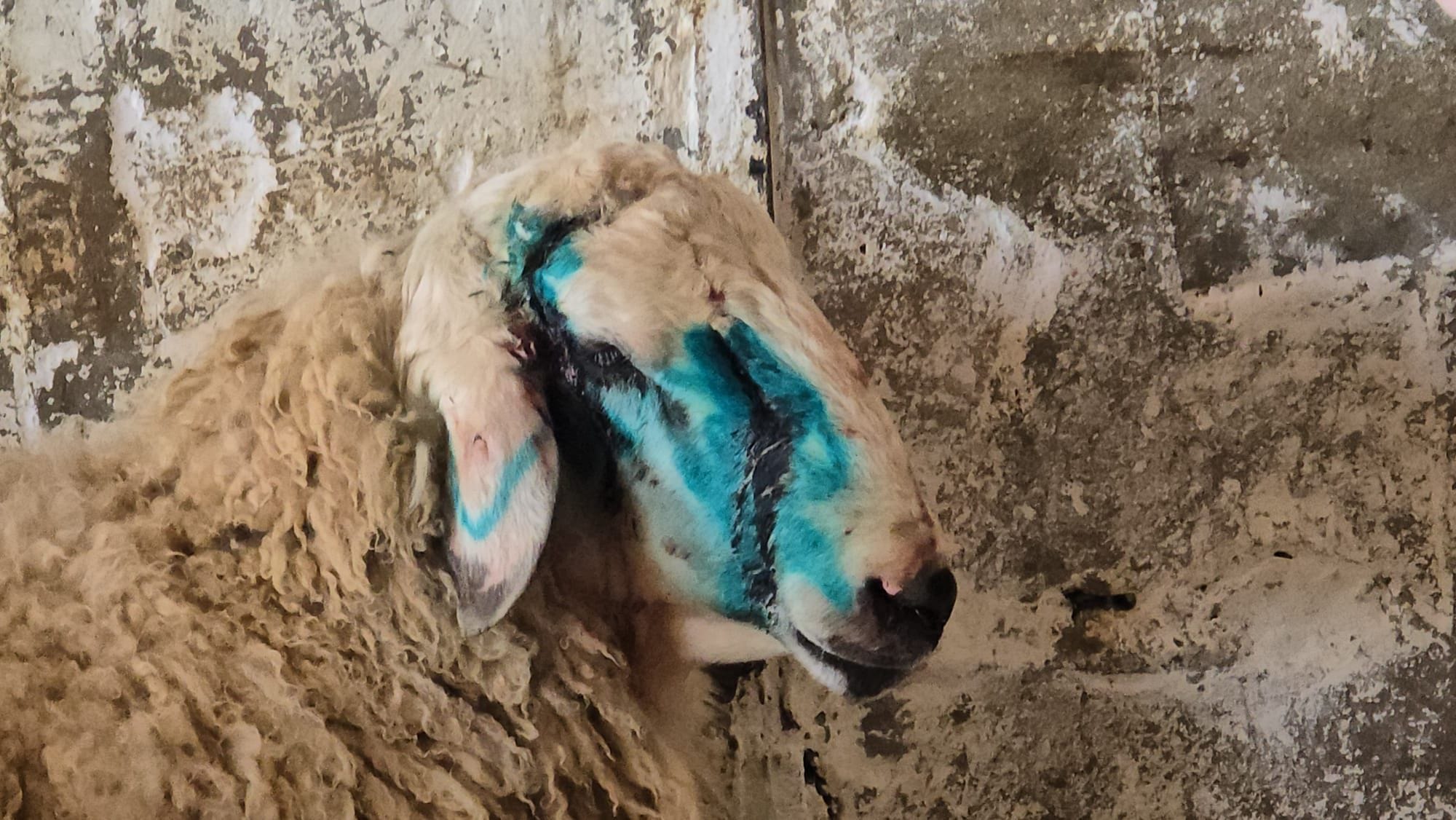
Going back many generations, the livelihood of Palestinians in Masafer Yatta has depended on sheep. It was and is our main work and source of income. We take their milk, and make cheese, yoghurt, butter and meat to sell in markets. But it has never been simply a matter of business: a beautiful relationship exists between the people in Masafer Yatta and their sheep. When a shepherd goes out from the morning to the evening, he is with the sheep for a long time, and in a way they become a part of him. The sheep have the soil, and also the people have the soil.
Because of this, the sheep are the point that connects the Palestinian people to the land. After all, for what do we plant, and tend to, and sow the land? For the sake of the sheep.
I have seen people cry when they lose their livestock – it is a form of grief. Every Palestinian who has sheep and grows up with this way of life has a deep relationship with them and understands this. The shepherds have their own language, and this is a language which can’t be translated to English. The sheep move with the generations. The father gives the sheep to his son, who gives them to his son, who gives them to his son. And so on.
I grew up seeing the sheep with my family around my home. My father took them out to graze, and when I grew up, I started taking them to graze too. When you read my CV, ask who’s Hamdan, or search my name on Google, you will find an Oscar-winning director, photographer, filmmaker, and also a shepherd.
I remember when I was growing up in the early 2000s, one winter it snowed, covering everything, all the houses, shelters, and tents. One day, it was so cold – to this day I can remember the cold of that day on my skin. As the sheep couldn’t go outside in that temperature, my family and I brought water for them from the water well. I couldn’t feel my fingers but I was playing with the snow on the way to bring water to the sheep. I wasn’t thinking about the pain in my fingers, simply about how all the land was white. This is one of the most beautiful memories of my whole life.
The intensification of the occupation in Masafer Yatta and across the West Bank means that people have less and less access to their grazing lands. Violent settlers attack or arrest the shepherds, and so after a few months, or after a year, the shepherds stop going out with the sheep at all. Then, in our forced absence, the settlers direct their own flocks of sheep to eat up our crops. They destroy our fields and claim them as their own.
We know that settlers have targeted our ability to graze our flocks for a reason. To put the economic impact into perspective, shepherds in the region make around 3,000 shekels a month from selling milk, yoghurt, and other products derived from their sheep, which enables us to make an income and provide for our families. But nowadays, with the sheep unable to graze freely, approximately 2,000 of those shekels must be spent on buying fodder to feed the sheep – leaving nowhere near enough to feed our own families at home. This physical and financial suffocation is against international law.
If the settlers aren’t preventing us from grazing our sheep, then they are attacking and killing our sheep directly. On 22 December 2025, in the middle of the night, a group of settlers attacked a Palestinian home in Wadi Jheish, a shepherding village directly next to my village of Susiya. Settlers shattered the windows of a home and released pepper-spray inside, seriously injuring a mother and her two children. The same night, another group of settlers went to the family’s sheep pen, broke through the gate, and started beating the sheep with bats and knives. They killed around three sheep and injured several others. They also broke the security camera in order to conceal evidence of their crimes. The whole attack took a mere few minutes.
What did the sheep ever do to the settlers? Why kill them? I ask myself this often. They cannot talk, they are not capable of violence. But because the sheep have a relationship with Palestinians, the settlers have to kill them: they are guilty, and Palestinian, by association.
Indeed, one of the settlers’ darkest, most disturbing weapons against us is biological terrorism. For years, settlers have been dumping dead sheep in the middle of our villages – a tactic they have increasingly relied on in recent months. This has the effect of infecting our own flocks, killing them, and often also making us sick. It is as if they are trying to turn the land and the natural world against us.
When they engage in this kind of depraved violence, they are sending a message that they can do whatever they want, that they don’t respect either our rights as human beings or the rights of animals.
The police and the army don’t do anything to prevent this violence. We are living in the middle of chaos where there are no rules or laws. When you see the IDF stealing sheep along with the settlers, you understand that the settlers hold all the power and support of the government. This violence and these attacks are not coming from them alone, there is a whole government behind them, pushing them to do this. Some people say that it’s only some people, just some bad apples. But anybody who has watched the video of the pogrom in Halaweh, where settlers and soldiers stole sheep together, understands that the settlers and the state go hand in hand to destroy our livelihood, our characters, our hope and our memories.
Despite all these hardships forced upon us by the settlers, if you ask a Palestinian whether he would sell his sheep, he will refuse: he understands that doing so would create an unbearable and unnatural separation from his land and his culture.
We have hope that this situation will end one day. We actively resist the occupation’s laws that oppress us – such as the outdated Ottoman-era law that if you don’t use your land for a certain period of time, it no longer belongs to you. This past winter, the army regularly tried to prevent us from ploughing our land in Susiya village. We continued going out and ploughing part of it, all the while filming and documenting everything, to show that our land is still ours.▼
Author
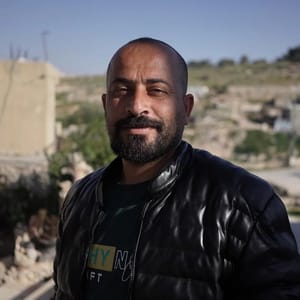
Hamdan Ballal Al-Huraini is a farmer, photographer, and human rights activist from Susiya in the West Bank.
Sign up for The Pickle and New, From Vashti.
Stay up to date with Vashti.