A mourning tent for each
Sitting next to this family’s devastation, I have the impulse to try and scale it.
Amir Muhammed Shanaran was a calm, religious man, his father tells us. He has pulled his plastic chair over to where we are sitting in the mourning tent in Wadi Rakhim. He says that Amir spent most of his time at home, at work, or at the mosque. He speaks soberly. A bandage is wrapped around his head, a record of the same assault that left one of his sons martyred and another in critical condition.
On Saturday 7 March, settlers attacked the Shanaran family. When they threw Amir’s father to the ground, wounding his head, Amir approached to try and help him. In response, a settler shot Amir in the neck and stomach, killing him.
In the tent, through two layers of translation – Arabic to Hebrew, then Hebrew to English – I learn that Amir had been imprisoned for working within Israel’s 1948 borders without a permit, and that he had only been out for a few weeks when the settlers attacked. His brother Khaled, meanwhile, had just returned from a long stint working out of town. Khaled heard news of the attack and rushed to the scene. It was the first time the brothers had seen each other in five months. They were reunited for mere minutes before the settler killed Amir and critically injured Khaled.
My comrade asks if there is a story Amir’s father would like to share about his son. He responds that someone had come to the mourning tent earlier and revealed that Amir had been quietly giving part of his earnings to the poor and that nobody in his family had known.
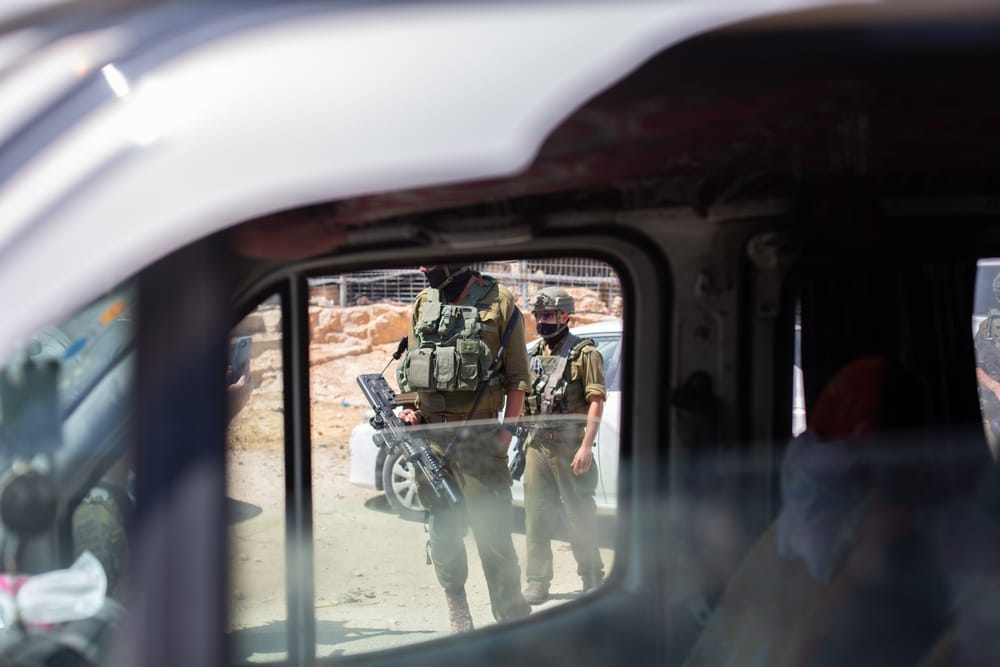
There’s no grieving in peace. We learn that a group of Palestinians on their way to the mourning tent were accosted by a settler who told them they would all go to the same place as Amir. My comrade and I are both instantly reminded of the night before, when a settler came through Umm al-Khair and taunted its residents with the name of a beloved local activist gunned down last year. “Where’s Awdah?” the settler had asked. Now, as we sit in the tent, I get a call. There are problems nearby, we have to go. We pile into the car and drive to a house with settlers, soldiers, and border police out front. We witness the same scene we’ve witnessed countless times: the soldiers pick out two Palestinian men, ziptie them, put them in the back of their trucks, and drive away.
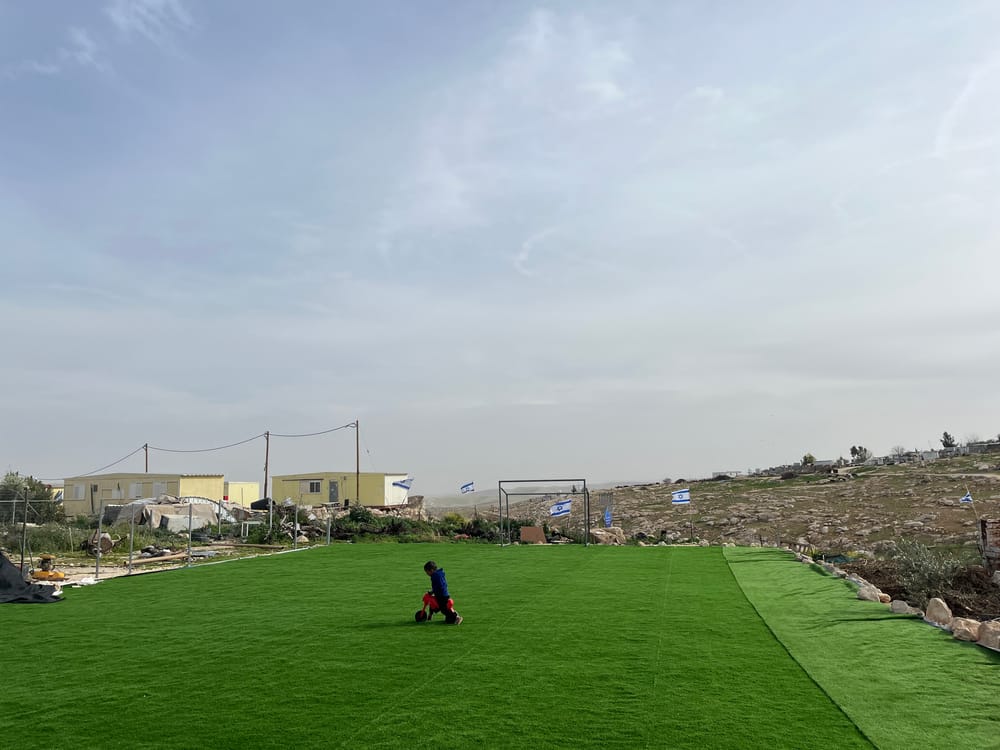
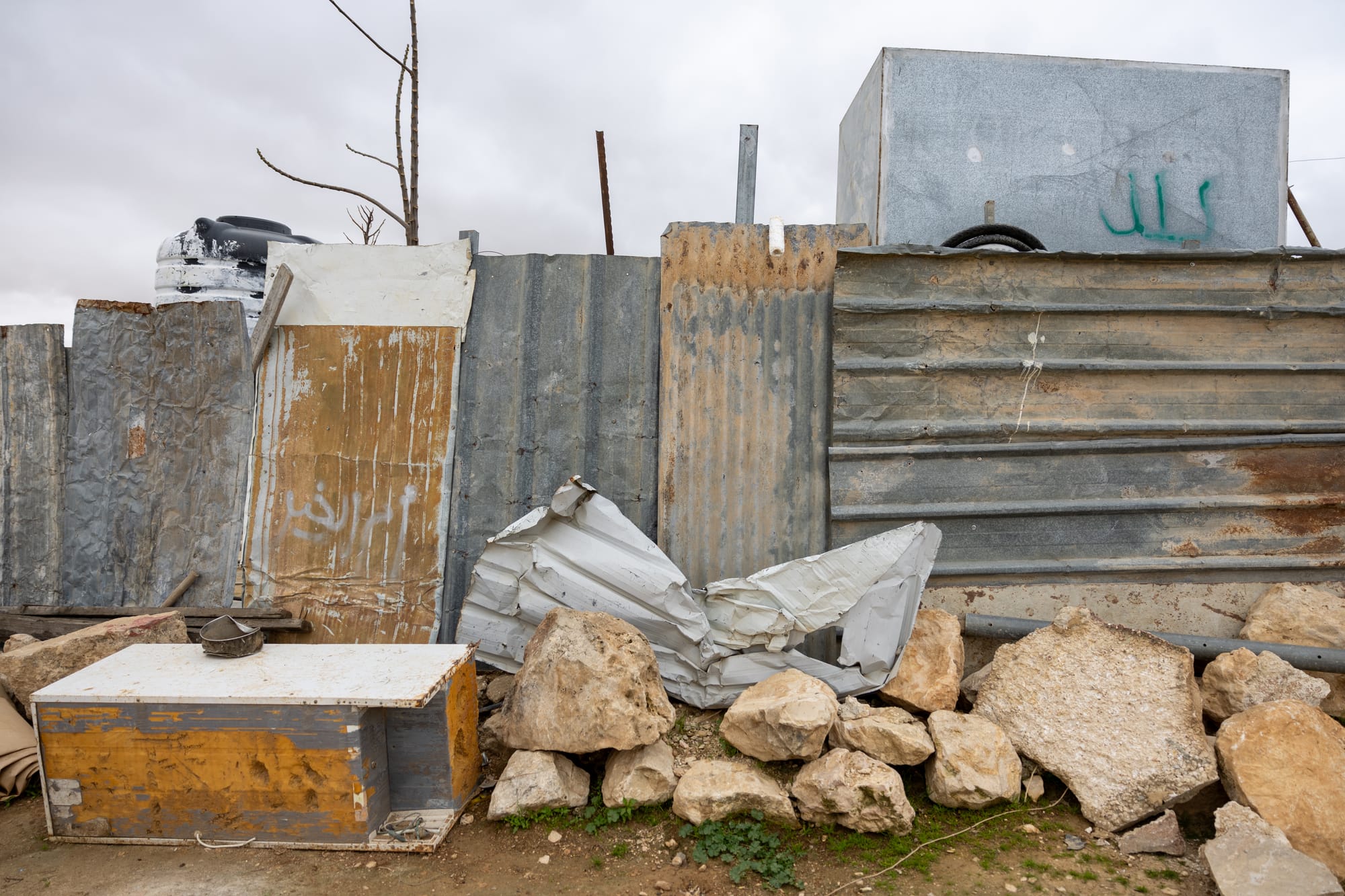
In some ways, the war has barely changed daily life in Masafer Yatta. People get up in the morning and graze their flocks, play with their children before breaking down pallets for firewood and shaping cheese into cones that they leave to age in the sun. They still sit around the stove at night smoking cigarettes and talking politics. The same settlers come harass the same families every day. The militia raids another village for another made-up reason. There’s another beating, another arrest, another man blindfolded and forced to his knees, another broken well pump, another cut power line, another burnt house, another settler flock damaging another Palestinian olive grove.
It’s harder to sleep with the missile alerts, the sirens, the sounds of bombardment – but how many Palestinians were sleeping well, anyways? It’s something we’ve all noticed, how late our hosts stay up and how early they rise. I ask Khalil, a community leader in Umm al-Khair, if he finds it hard to sleep with the war. He tells me that he has not really slept since July, when his brother Awdah was murdered.
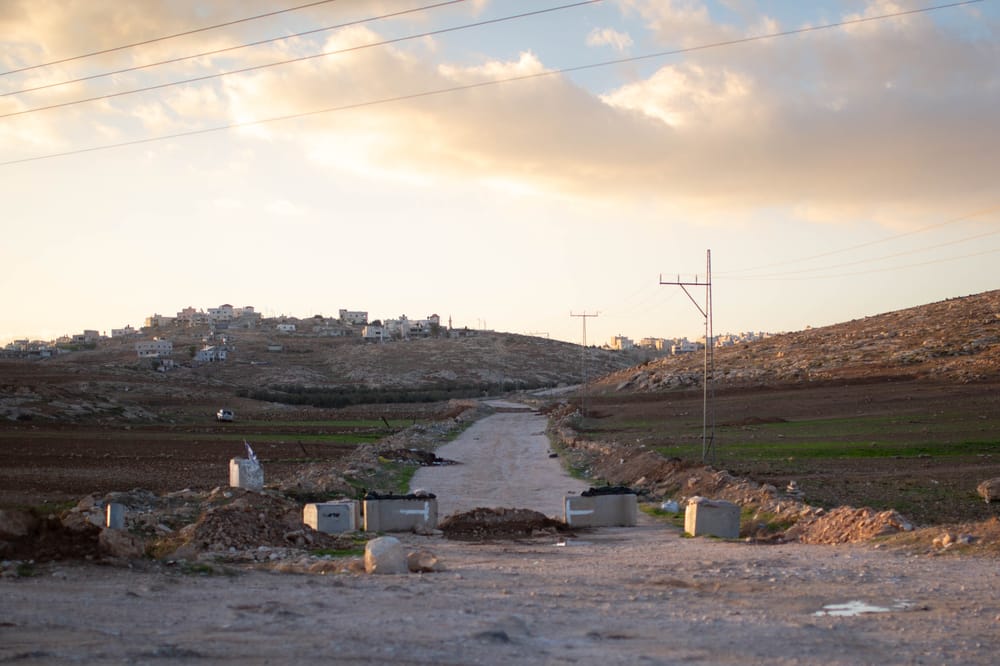
Little has changed outright, but certain things have intensified. The war is being used as an excuse to further restrict Palestinians’ freedom of movement. After 7 October, the occupation began installing gates at the entrances of villages around Masafer Yatta that Israeli authorities can open or close at their will. Now, with this new war, new gates have appeared. Villages are closed for days on end. Yatta, the nearest city, was inaccessible for several days after the war began. One day, in the village of Tuwani, some comrades and I found ourselves helping a Palestinian man push a car that had bottomed out when he had tried to drive around the gate to leave.
The signs of apartheid are all the more glaring now. When we hear missile sirens, they’re coming from the nearby settlements. The Palestinian villages have no siren systems. They have no bomb shelters either, though Israel, as an occupying power, would be the one responsible for building both. When our phones scream their warnings, some of us look around for the sturdiest structure nearby, while others make eye contact and then shrug, turn off the notification, and continue with our days.
Amid the relentless, grinding indignities of life under occupation, there has been a marked escalation in the most extreme acts of violence. Amir is one of at least eight Palestinians in the West Bank who were murdered by settlers during the first week of war.
In the mourning tent, I have the impulse to try and scale this tragedy. Here I am sitting next to this family’s devastation. I try to conceive of every martyr of the US and Israel’s imperial aggressions with their own attendant devastations, their own attendant textures and specificities and depths of grief. Each as precise and wrenching as this grief that I happen to be near. As I write, the death count in Iran is 1,444. In Lebanon it’s 912. The Gaza genocide goes on: Israel has killed at least 631 Palestinians in Gaza just since the start of the “ceasefire”. Maybe these numbers will be higher when you read this. Maybe new numbers will not yet have been published, but there will surely be new people dead. I am trying to imagine a mourning tent for each.▼
Author
Sophie Drukman-Feldstein is a writer, editor, and translator.
Sign up for The Pickle and New, From Vashti.
Stay up to date with Vashti.